Blue Schools:
Learning with Rainwater.
The Blue School concept was pioneered by IRHA in 2007 to transform rainwater into a practical resource for schools and communities.
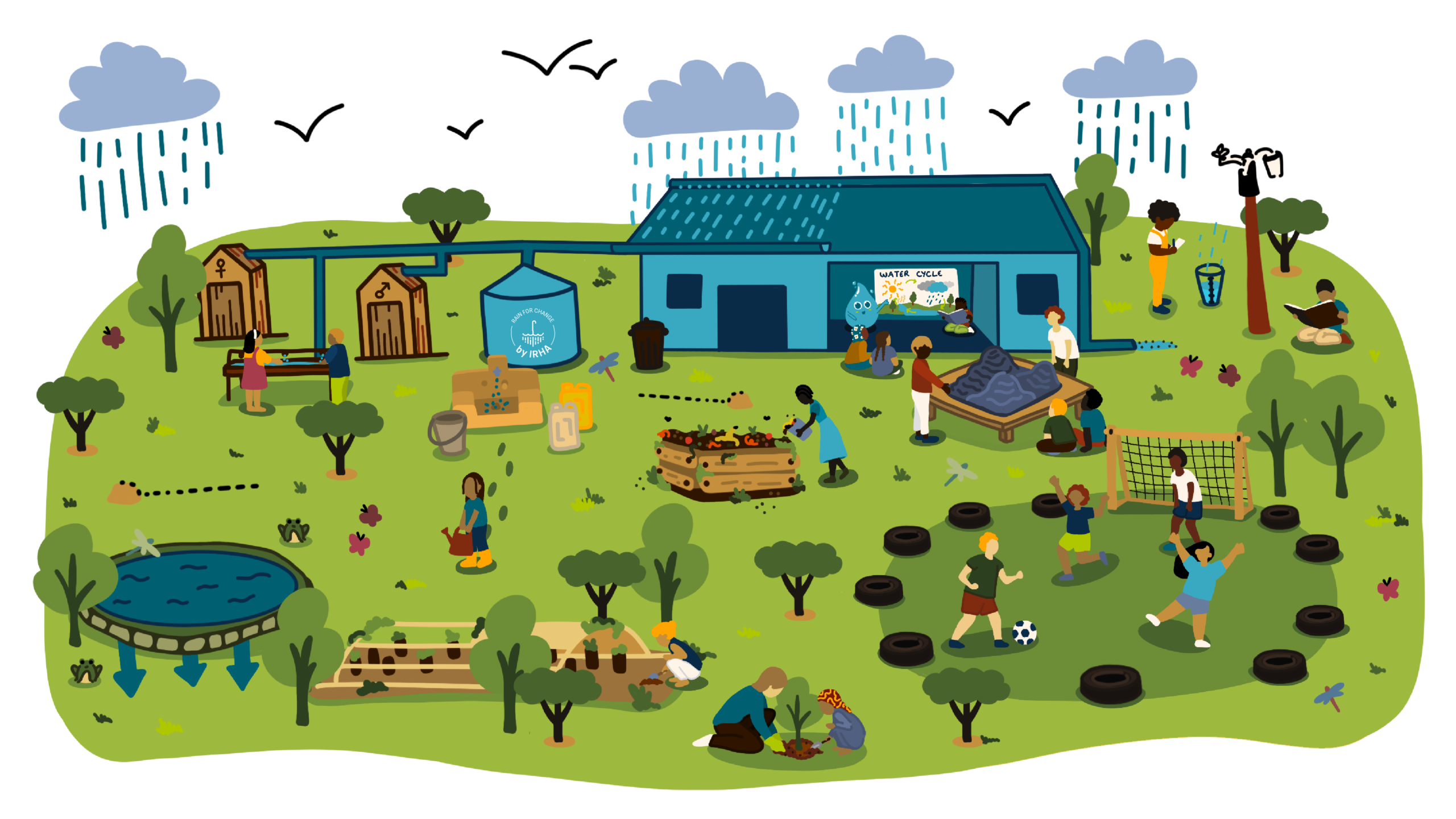
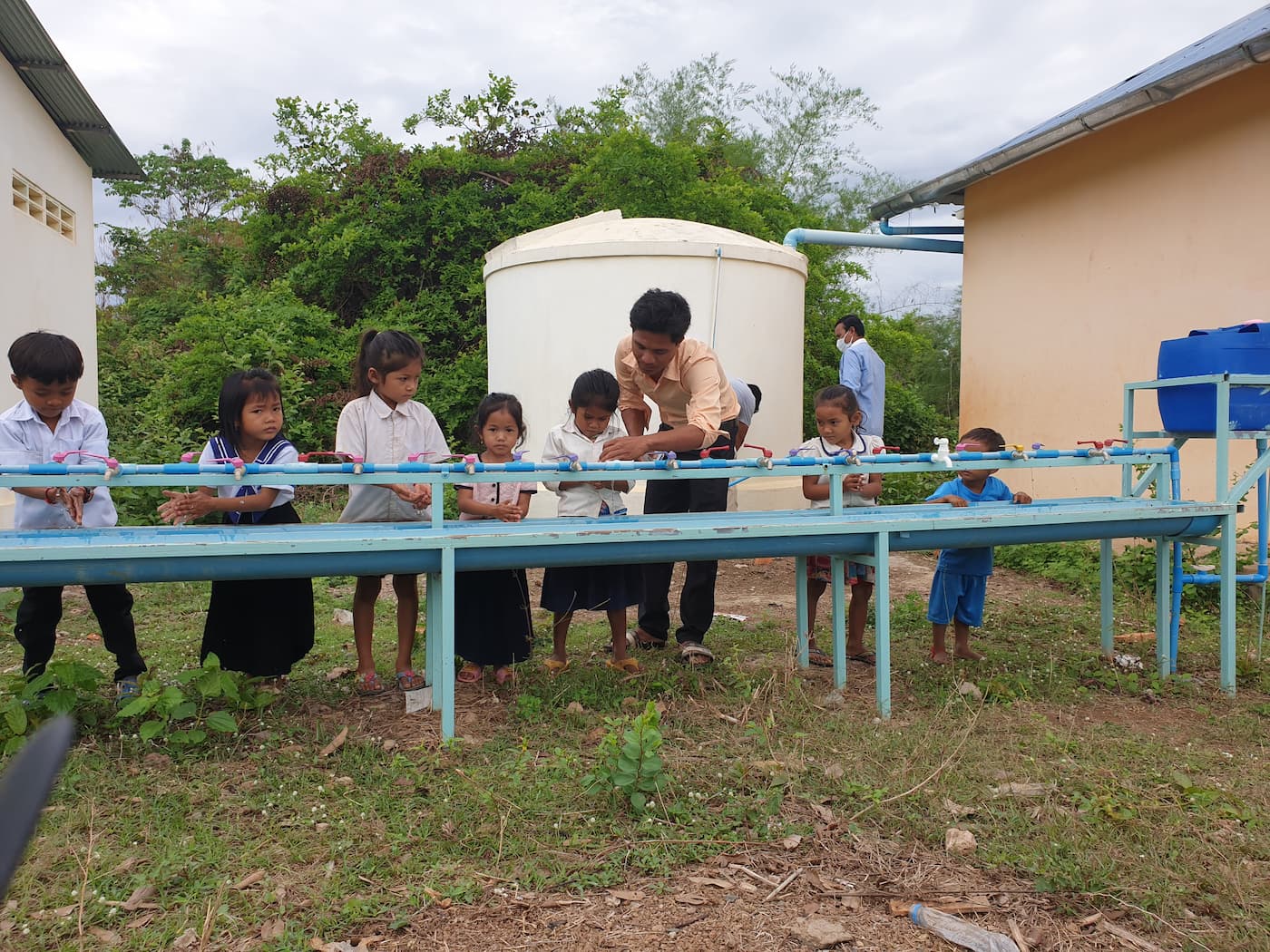
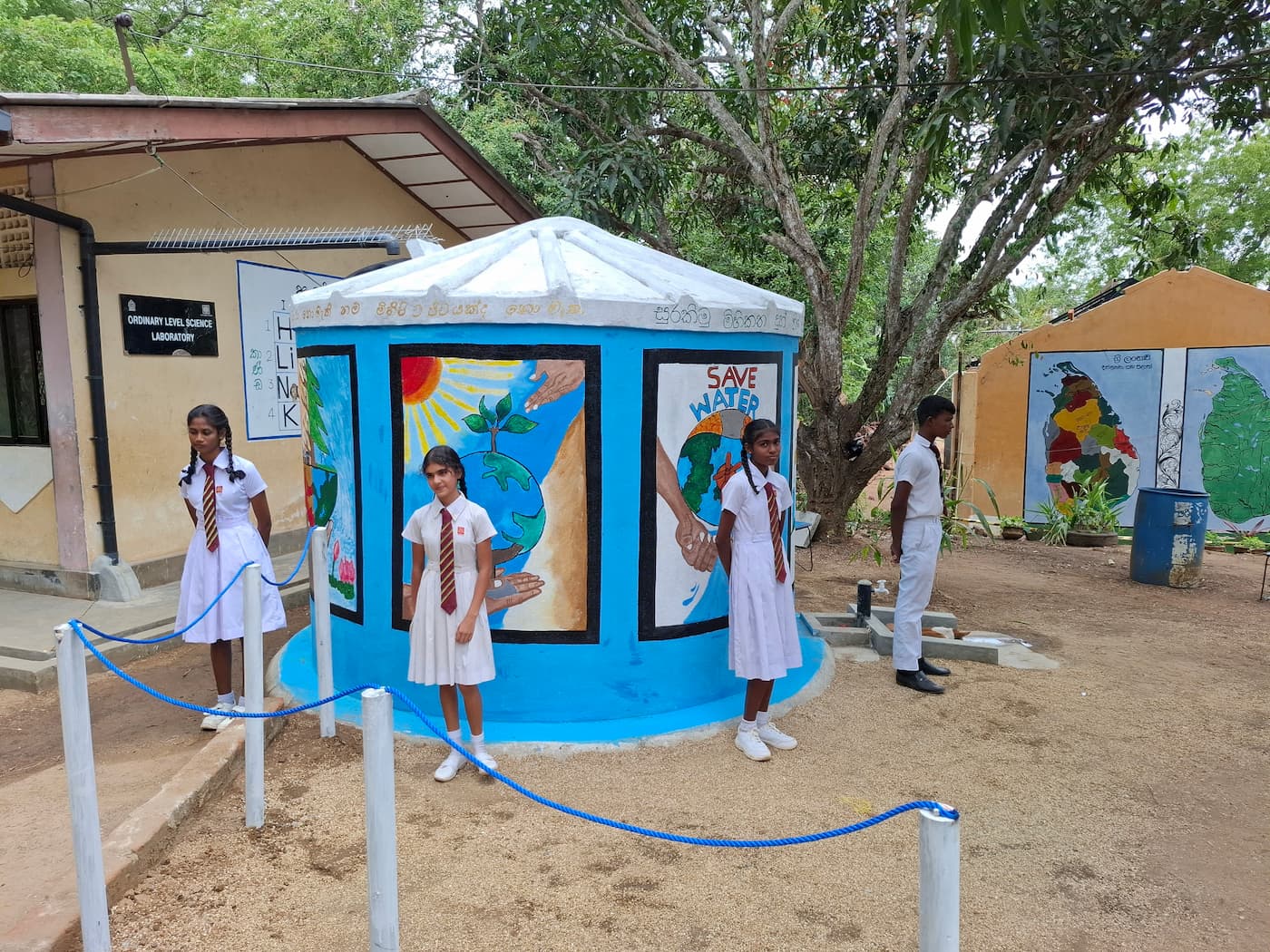
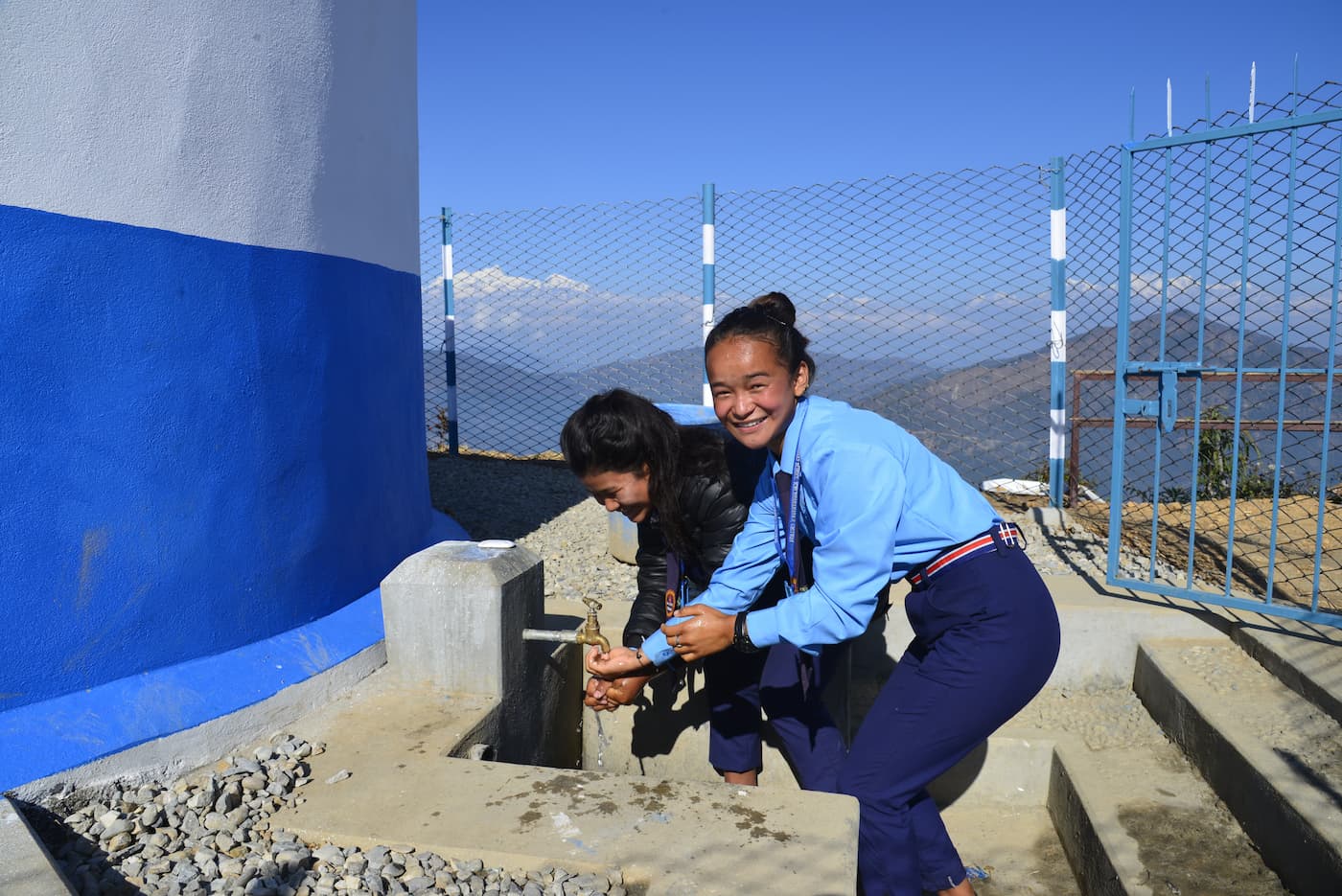
Rainwater collected from school rooftops is stored in durable cisterns and used for handwashing, sanitation, and daily school activities. Reliable access to water improves hygiene and supports menstrual health, helping create safer and more inclusive learning environments, particularly for girls.
Over time, the approach has evolved through field experience and partnerships. With the support of the Swiss Agency for Development and Cooperation (SDC) and collaboration with development and education partners, the concept has been further expanded and is now implemented by multiple organizations worldwide.

Learning
By Doing
School gardens, tree planting, and composting activities turn the school campus into a living classroom. Students learn how water, soil, plants, and food systems are connected while developing practical skills such as growing vegetables, caring for trees, and recycling organic waste. These hands-on experiences encourage sustainable habits that children can share with their families and communities.
Understanding Water And Climate
Students explore how water moves through their environment using simple tools such as rainfall observation, weather monitoring, and participatory 3D watershed mapping. These activities help them understand local water cycles, introduce them to environmental risks and climate resilience, and encourage them to develop practical solutions that strengthen their school and surrounding community.
A Blue School is more than a school with water.
It is a place where rainwater becomes a catalyst for learning, resilience, and sustainable change in communities.