Our Projects · Disaster Risk Management & Ecosystem Restoration

Emergency Rain

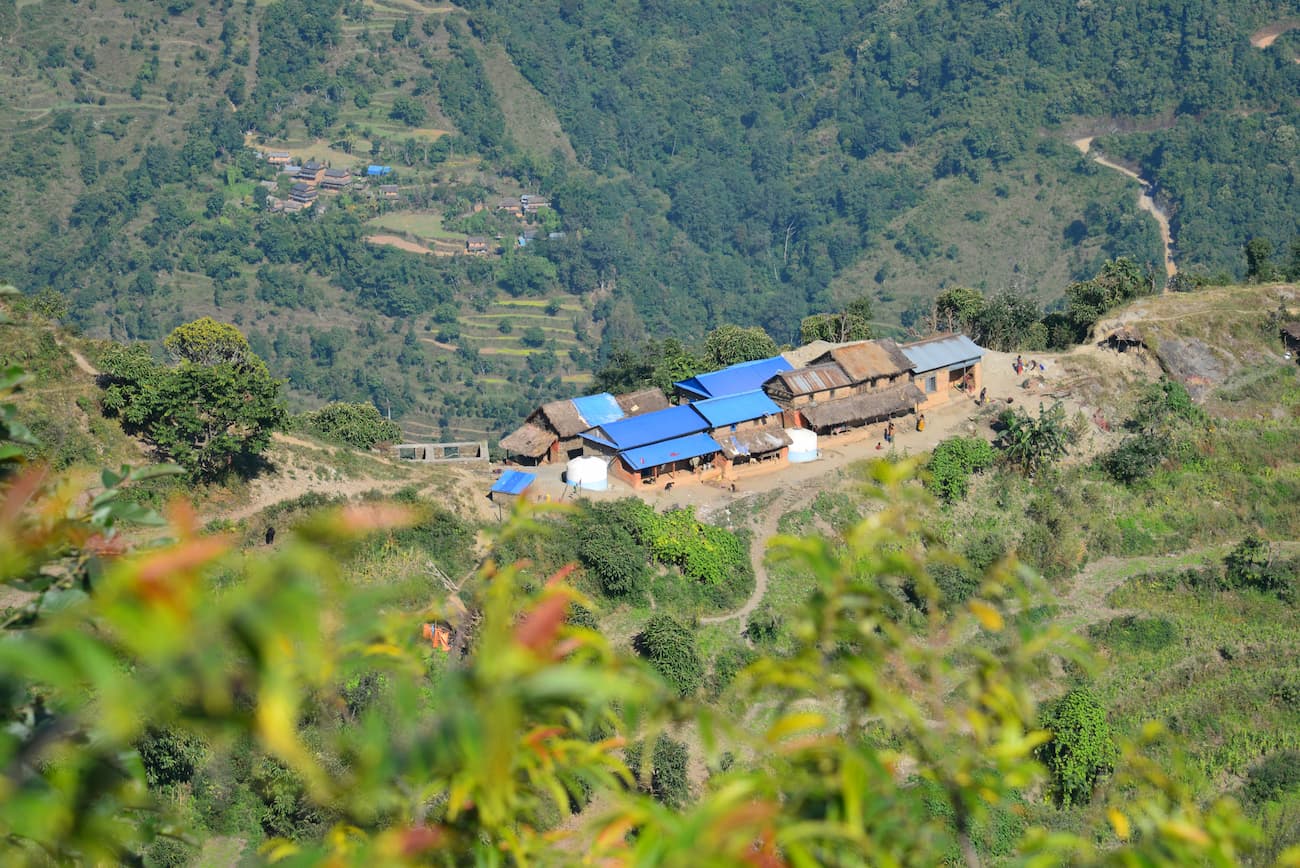
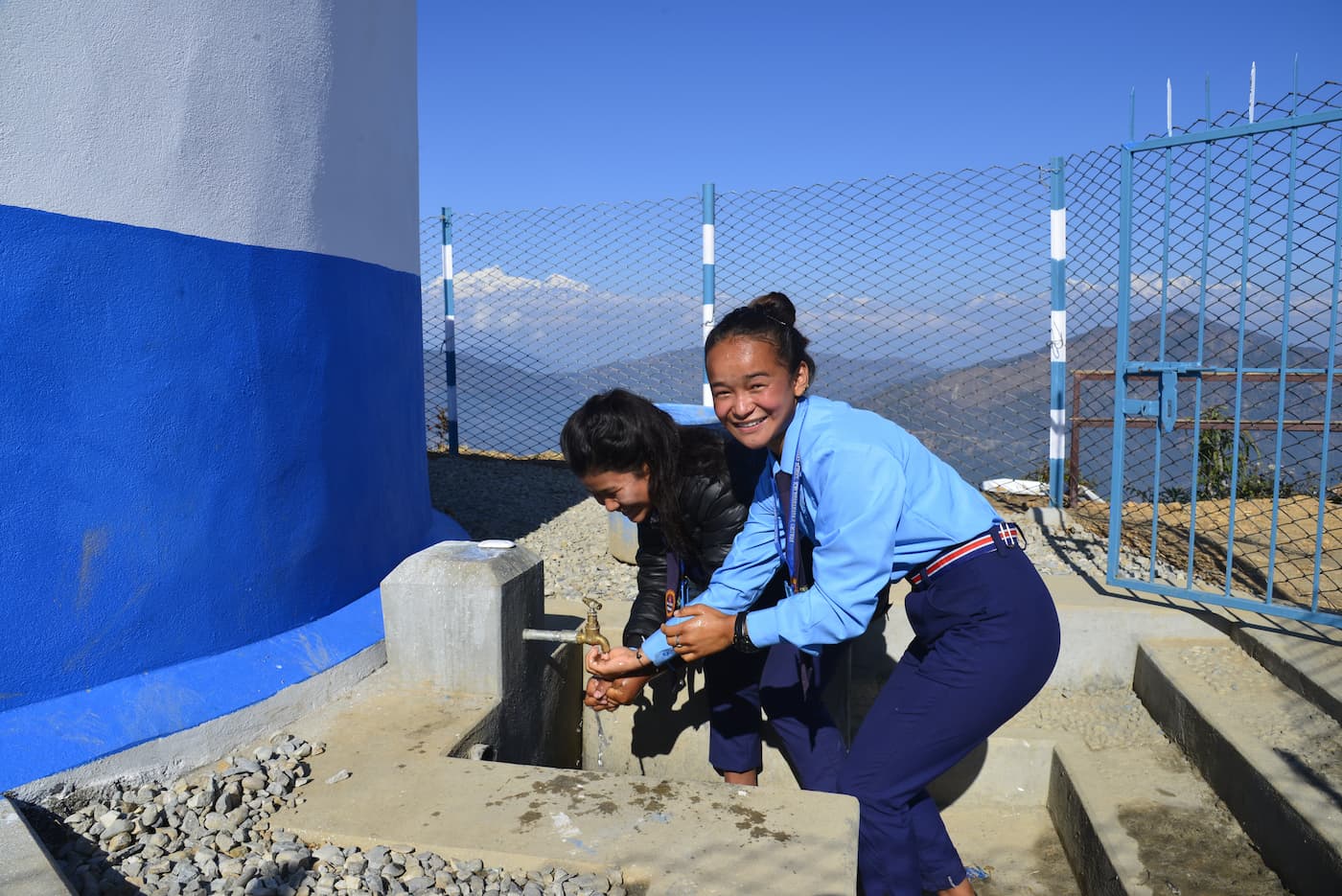
After the 2015 earthquake, IRHA and Guthi brought rainwater, toilets and hygiene training to a Kathmandu school and a camp for displaced families.

CompletedDisaster Risk Management & Ecosystem Restorationfrom 2015, in the months after the earthquake of 25 April (eight-month project) to verify: exact dates
© Kanchan Nepal
WhereKathmandu Valley, Nepal – Viswa Niketan Higher Secondary School in Kathmandu and the Liwali camp for internally displaced people in Bhaktapur
Whenfrom 2015, in the months after the earthquake of 25 April (eight-month project) to verify: exact dates
WithGuthi, the school, the Liwali camp committee and local authorities
Rainfall≈ 1,500 mm a year in Nepalnational average, World Bank; local figure to add

Results

  • 2,822people with access to water and sanitation
  • 3,345people reached by awareness raising
  • 90people trained
  • 8toilets rehabilitated

The Challenge

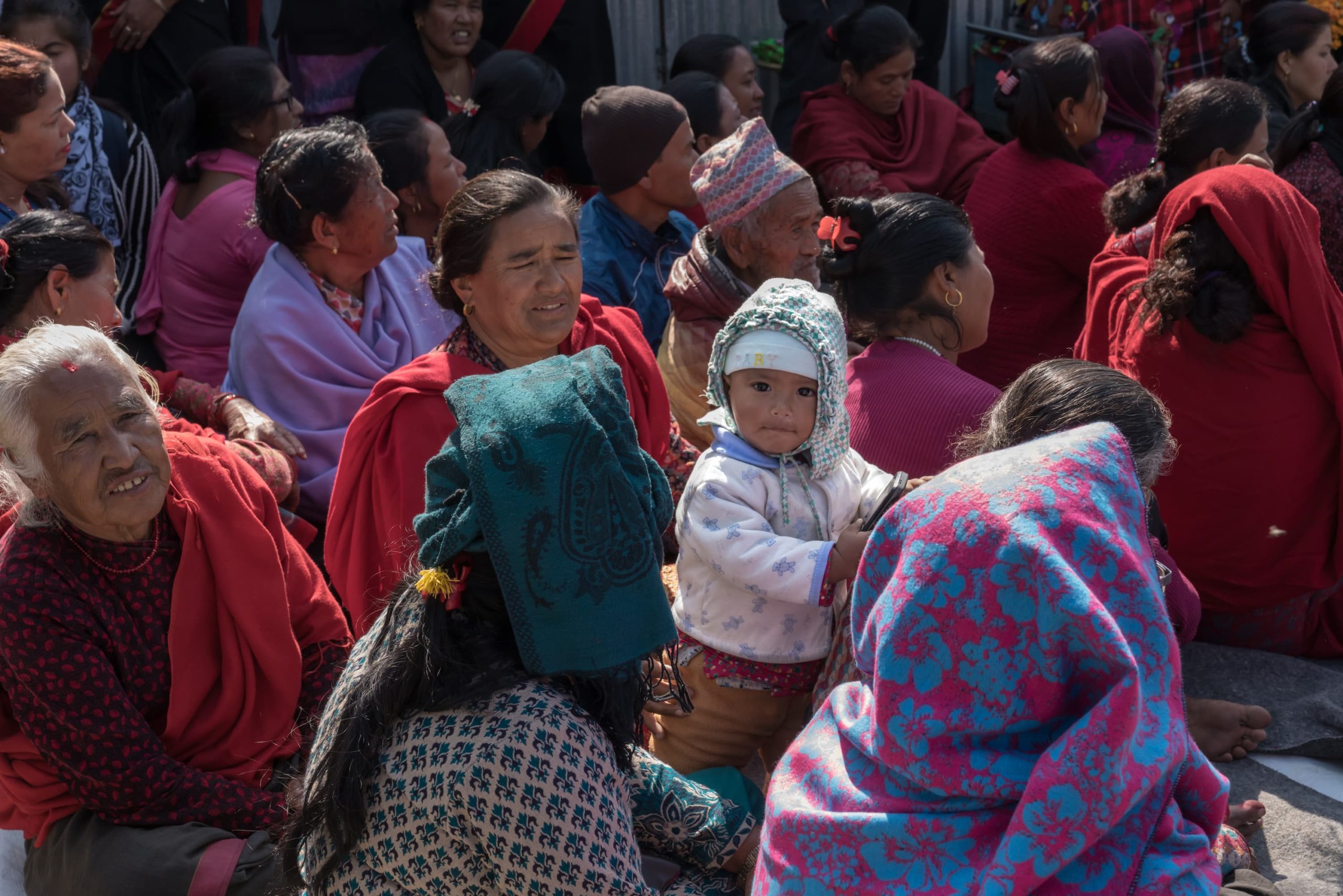
The earthquake of 25 April 2015 forced many families in the Kathmandu Valley out of their homes and into camps for internally displaced people (IDPs). In Liwali camp, Bhaktapur, residents relied on wells whose water later tested as contaminated. For drinking water, they walked half an hour to a public tap. Schools also needed safe water and working toilets so that pupils could learn in decent conditions.
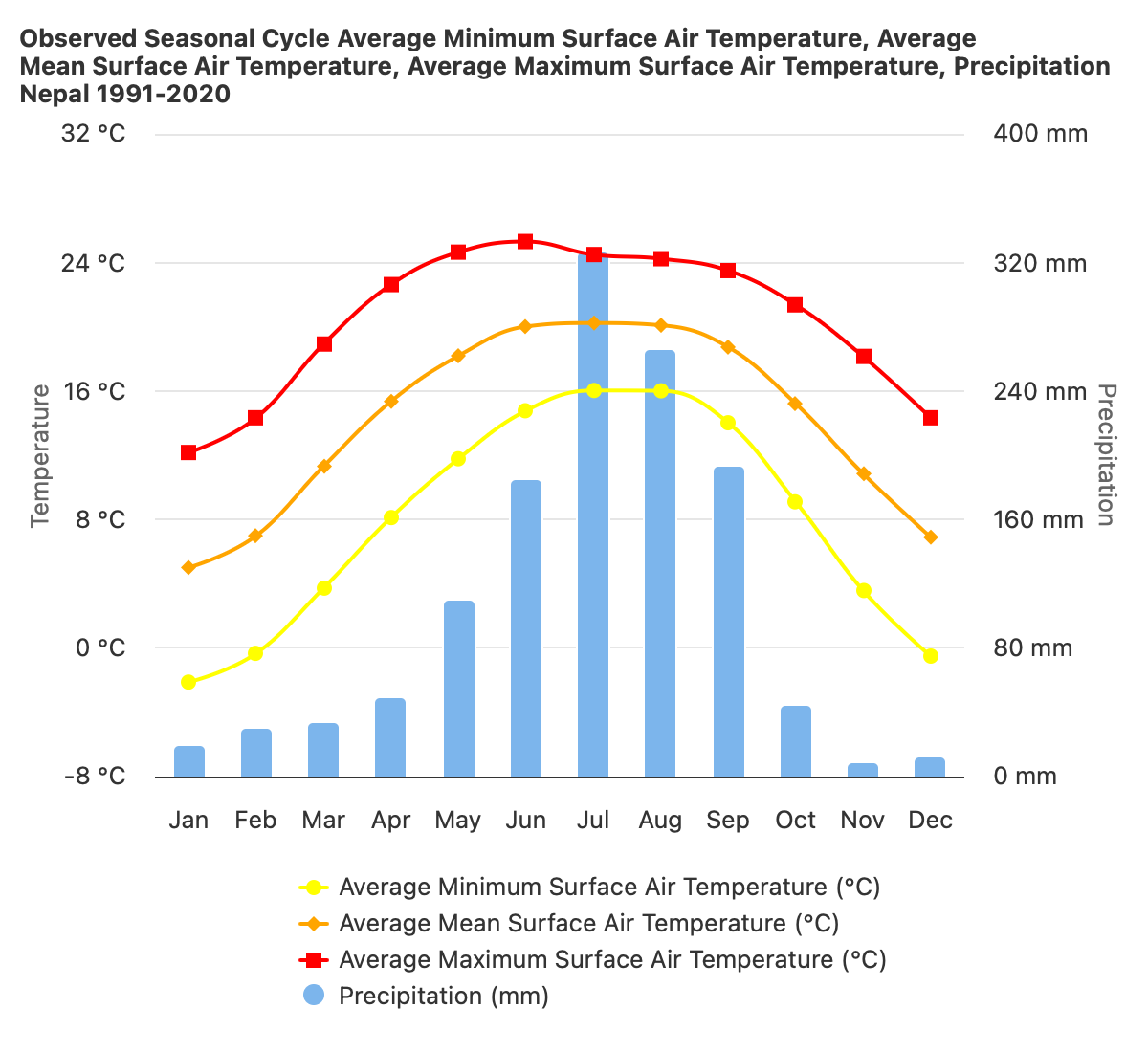
Average monthly rainfall and temperature in Nepal, 1991–2020
Rain in Nepal: about 1,500 mm a year, mostly June to September (monsoon). Source: World Bank Climate Change Knowledge Portal (observed 1991–2020) and World Bank average precipitation.

What We Did

  • Installed rainwater harvesting and storage systems at both sites, including a 50 m³ underground tank at Viswa Niketan school.
  • In Liwali camp, volunteer families helped to build an underground tank of 100,000 litres, four times the volume first planned.
  • Rehabilitated eight toilets.
  • Trained pupils, teachers and camp residents in rainwater harvesting, sanitation and hygiene.
  • Raised pupils' awareness of their environment and of disaster risks.
  • Supported micro-businesses linked to sanitation. Women in Liwali camp started producing liquid soap.

Results

  • 2,822 people gained access to water and 2,822 to sanitation. About 30,835 more people benefited indirectly (estimate).
  • 75,000 litres of rainwater were collected to verify: per season or in total.
  • Camp residents now use stored rainwater instead of contaminated wells.
  • The women's soap micro-enterprise was officially registered with the Chamber of Commerce. By 2020, it was selling 1,000 litres of liquid soap a month.
  • Bhaktapur Municipality asked for the approach to be extended to all six camps in the city. This led to the Rain Community Bhaktapur project (2017–2018).

“I can not fetch water because of my old age, but my daughter-in-law had to walk far to fetch water. Now the scenario has changed (since the construction of the 100'000l tank) and water is available at our door.”

Chini Nakarmi Maya, Maheshwori IDP Camp, Nepal (old IRHA website, Emergency Rain page, 2019)

On the Ground

Swipe or use the arrows, and click on a photo to enlarge it.

Children washing their hands using a rainwater basin at a household in Nepal · © Kanchan Nepal
Boy collecting water with his hands from a rainwater tank through water improved access in Nepal · © Kanchan Nepal
Boy washing his face with rainwater after improved access to water in Nepal · © Kanchan Nepal
Ferrocement household rainwater jar with tap, Nepal · © Kanchan Nepal

Partners and Funders

  • Implementing partner: Guthi (Kathmandu)
  • With: Viswa Niketan Higher Secondary School · Liwali IDP Camp Committee · Municipalities of Kathmandu and Bhaktapur · District Development Office · Reconstruction Authority
  • Funders: Republic and Canton of Geneva · City of Geneva

Resources

Project factsheet to upload (see notes in the page file)

From Our Blog Archive

archived posts: to re-publish on the new site, then update these links

Every Drop Restores

This project is completed. Discover what we are doing now, and help us take it further.