Our Projects · Disaster Risk Management & Ecosystem Restoration

Rain Community BhaktapurEmergency Rain Extension

old site titles "Raincommunity (Emergy rain extension)

At Bhaktapur Municipality's request, IRHA and Guthi extended Emergency Rain to all six camps for displaced families in the city and to Jana Prabhat school.

CompletedDisaster Risk Management & Ecosystem Restoration2017–2018 (12 months)
© Kanchan Nepal
WhereBhaktapur, Kathmandu Valley, Nepal – six camps for internally displaced people (IDPs) and Jana Prabhat school
When2017–2018 (12 months)
WithGuthi, Bhaktapur Municipality and camp residents
Rainfall≈ 1,500 mm a year in Nepalnational average, World Bank; local figure to add

Results

  • 6camps equipped with water storage and treatment
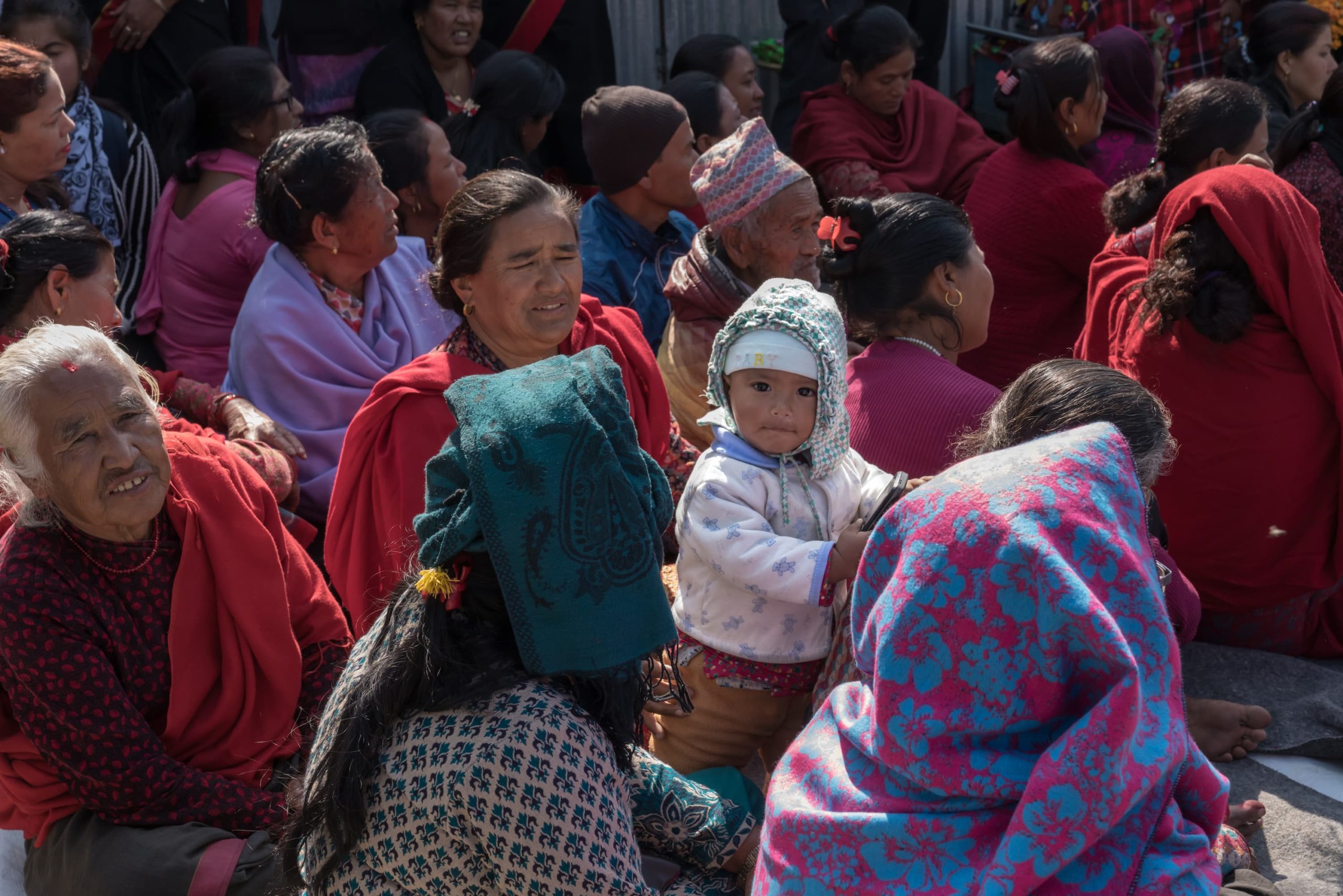
  • 1,467camp residents with a continuous water supply
  • 9,112direct and 18,580 indirect beneficiaries to verify

The Challenge

Two years after the 2015 earthquake, no family in Bhaktapur's camps had been able to rebuild their home, for lack of money. Access to safe water remained precarious. Bacteriological tests confirmed that the wells families used were contaminated with E. coli. Seeing the results of Emergency Rain in Liwali camp, Bhaktapur Municipality asked IRHA and Guthi to extend the approach to all six camps in the city.
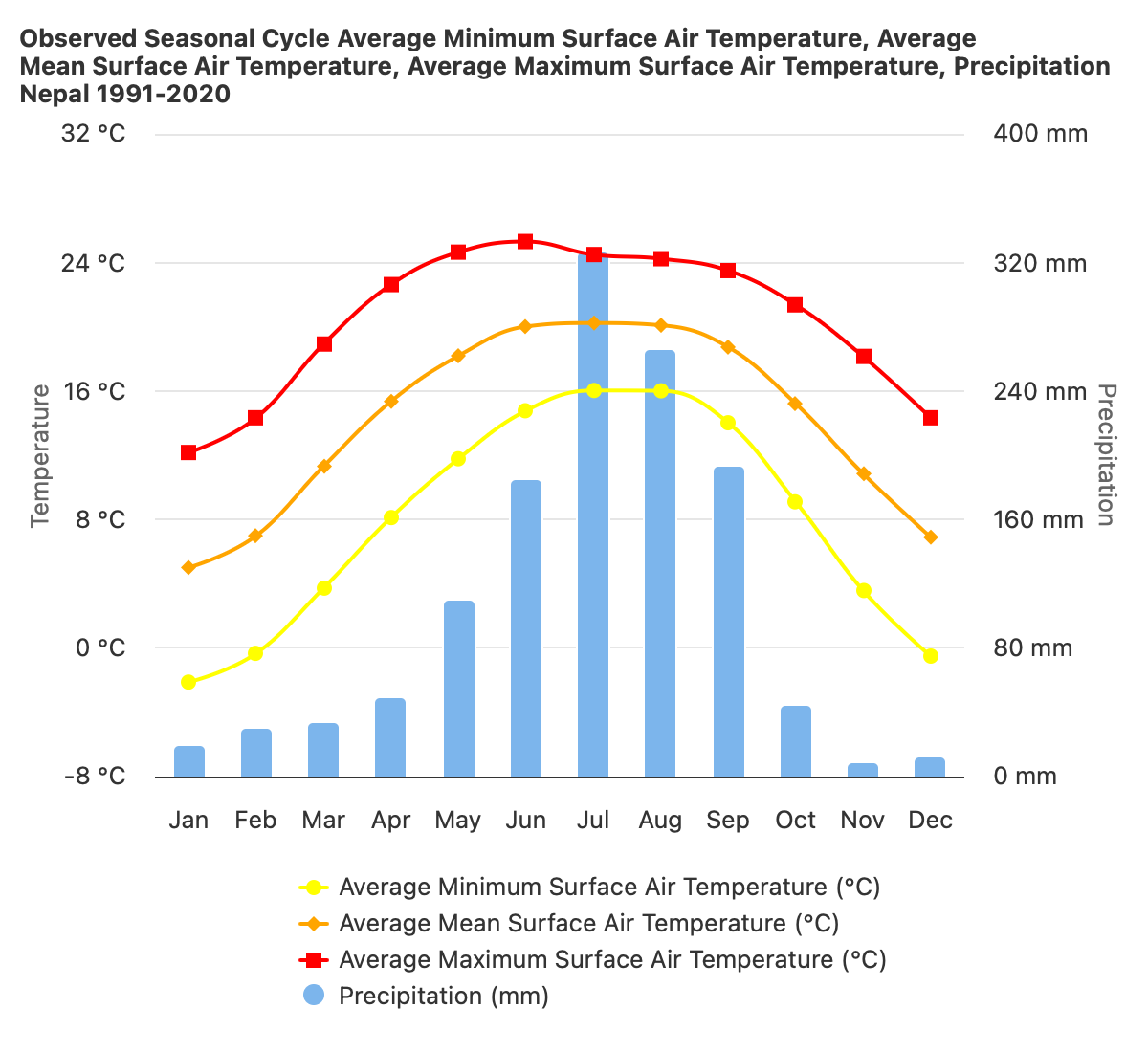
Average monthly rainfall and temperature in Nepal, 1991–2020
Rain in Nepal: about 1,500 mm a year, mostly June to September (monsoon). Source: World Bank Climate Change Knowledge Portal (observed 1991–2020) and World Bank average precipitation.

What We Did

  • Installed rainwater storage and treatment systems in each of the six camps.
  • Built community latrines in the camps, together with local authorities, residents and Guthi.
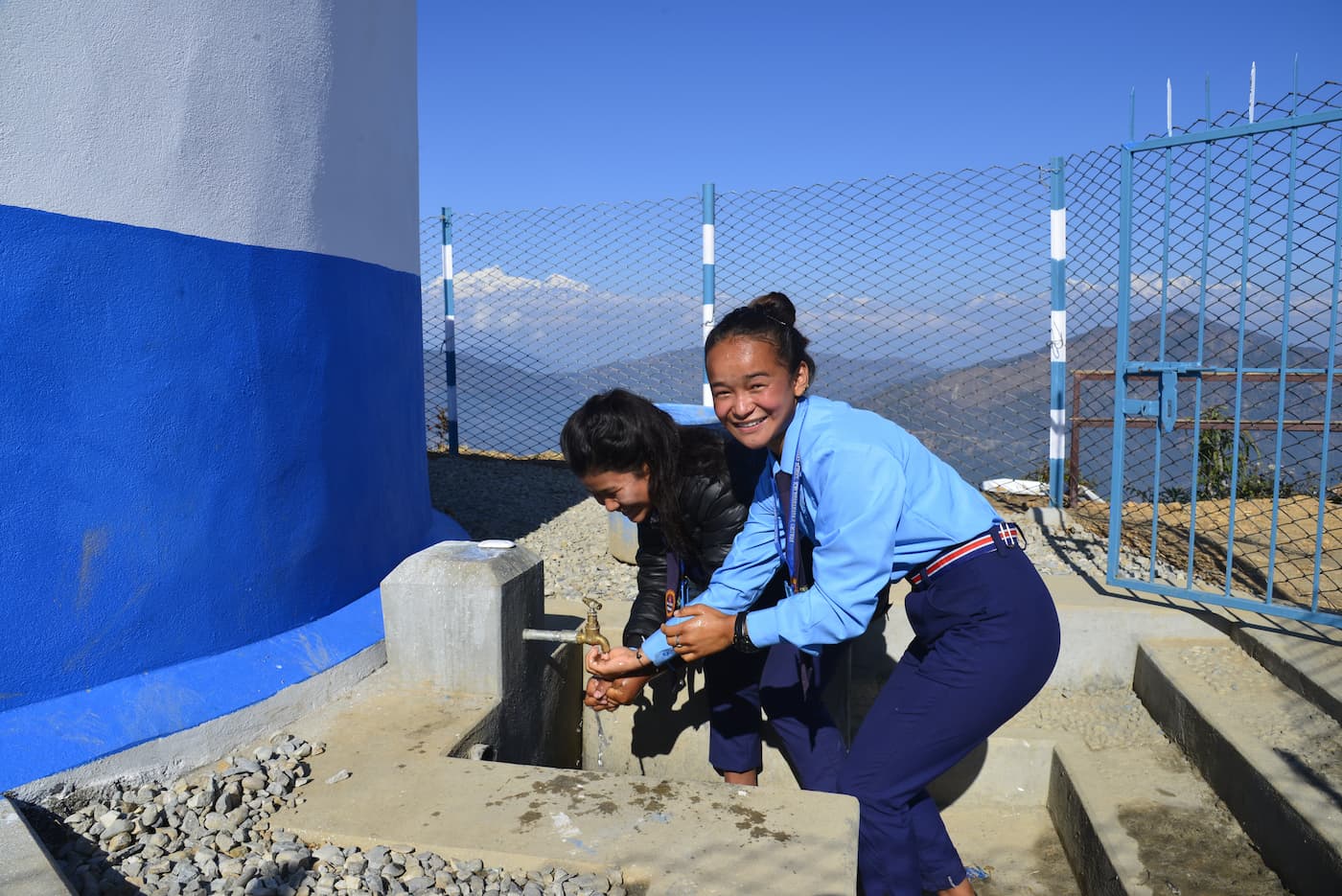
  • Built rainwater harvesting at Jana Prabhat school, including a 25 m³ tank.
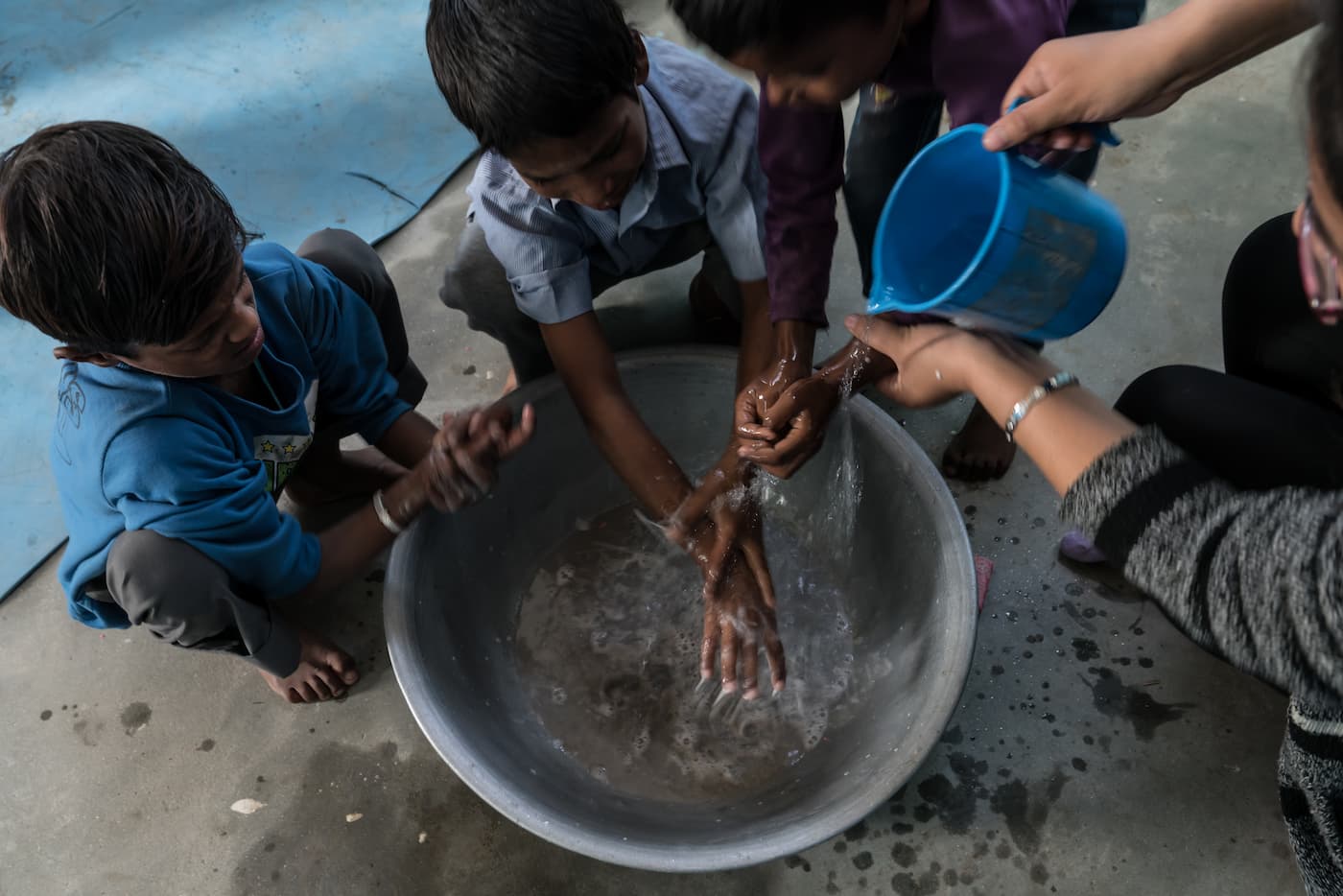
  • Trained young people at Jana Prabhat and Viswa Niketan schools on contamination risks and natural hazards such as floods, and on practical solutions: rainwater collection, recharge and reuse.
  • Continued to support the Liwali women's liquid-soap micro-enterprise, until Guthi helped to register it with the Chamber of Commerce.
  • Shared the results at the WEEC 2018 conference in Nepal, where IRHA organised a side event on rainwater management.

Results

  • 1,467 people gained a continuous water supply, covering all their needs for drinking, hygiene and household tasks.
  • Camp residents use harvested rainwater instead of contaminated wells.
  • Jana Prabhat and Viswa Niketan schools were labelled Blue Schools.
  • Bhaktapur Municipality took up rainwater harvesting as an important tool for water security in the city.
  • Guthi presented the Bhaktapur experience in two papers at the 2018 international conference of the Lanka Rain Water Harvesting Forum.

थोपा थोपा गर्दा घैँटो भरिन्छ।

“Drop by drop, the water jar fills.”

Nepali proverbproverb: wording and translation to check with our local partner

On the Ground

Swipe or use the arrows, and click on a photo to enlarge it.

Drone view of a remote hamlet in the Himalayas with rainwater harvesting systems · © Kanchan Nepal
Hillside home with a rainwater cistern, Nepal · © Kanchan Nepal
Ferrocement household rainwater jar with tap, Nepal · © Kanchan Nepal

Partners and Funders

  • Implementing partner: Guthi (Kathmandu)
  • With: Bhaktapur Municipality · camp committees and residents
  • Funders: Republic and Canton of Geneva · City of Geneva · City of Meyrin

Every Drop Restores

This project is completed. Discover what we are doing now, and help us take it further.