Our Projects · Disaster Risk Management & Ecosystem Restoration

Rain Communities NepalPhase 1

Communautés de pluie – Phase 1

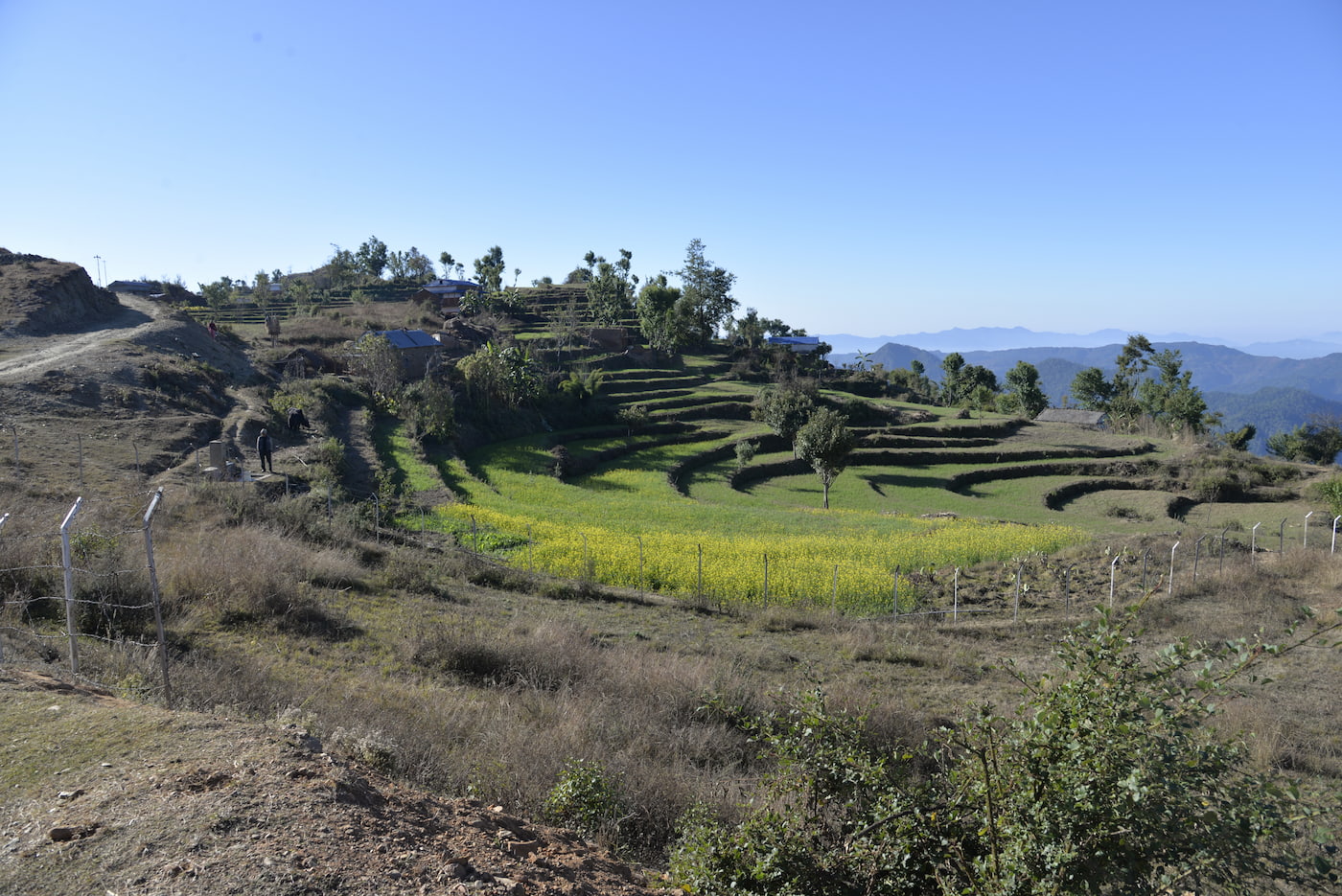
Villages in the hills east of Pokhara worked with Kanchan Nepal to keep rainwater in their watershed, restore springs and ponds, and farm more resiliently.

CompletedDisaster Risk Management & Ecosystem Restoration2019–2021 (two years)
© Kanchan Nepal
WhereKaski District, Nepal – four rain communities in the mid-hills east of Pokhara: Thulakot, Begnas, Hansapur and Majkot
When2019–2021 (two years)
WithKanchan Nepal, with support from FECOFUN and the Water Harvesting Lab of the University of Florence
Rainfall≈ 1,500 mm a year in Nepalnational average, World Bank; local figure to add

Results

  • 30rainwater tanks of 6 m³
  • 2improved springs
  • 20family agroecological production systems
  • 3nurseries

The Challenge

East of Pokhara, rural communities sometimes cannot meet their daily water needs. Climate change makes rainfall more variable: dry seasons are longer and monsoons more intense. Much of the rain runs off into rivers and lakes instead of recharging aquifers, so springs dry up. Deforestation and bare soils make it worse. Many men and young people leave for the cities, so fetching water falls on women, girls and older people.
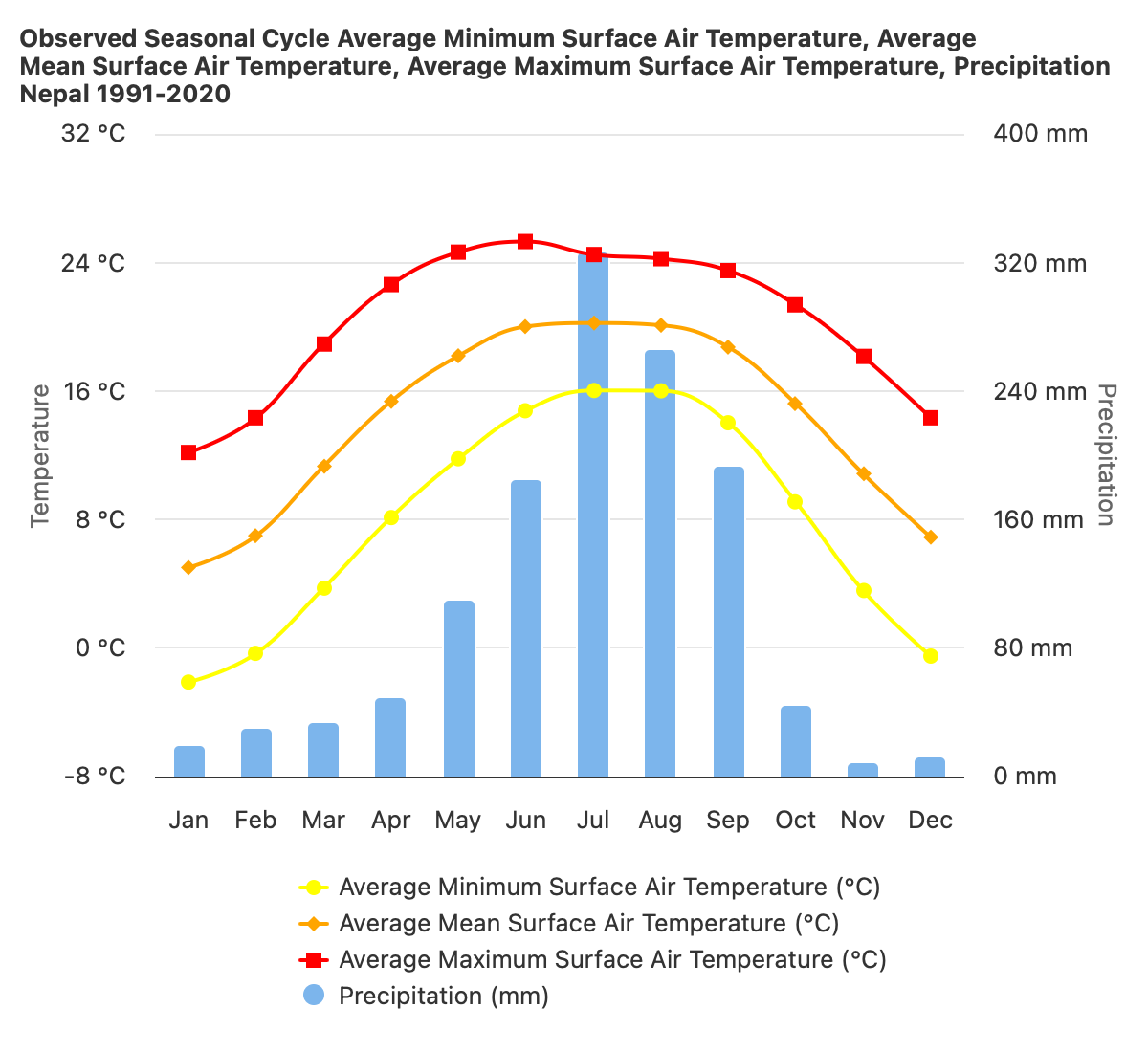
Average monthly rainfall and temperature in Nepal, 1991–2020
Rain in Nepal: about 1,500 mm a year, mostly June to September (monsoon). Source: World Bank Climate Change Knowledge Portal (observed 1991–2020) and World Bank average precipitation.

What We Did

  • Worked with communities and local authorities on a Water Use Master Plan, to manage water across the whole watershed.
  • Built participatory 3D maps with mothers' groups, youth clubs, water user committees, cooperatives, farmers' groups and forest user groups, so that people could locate springs, ponds, forests and fields together.
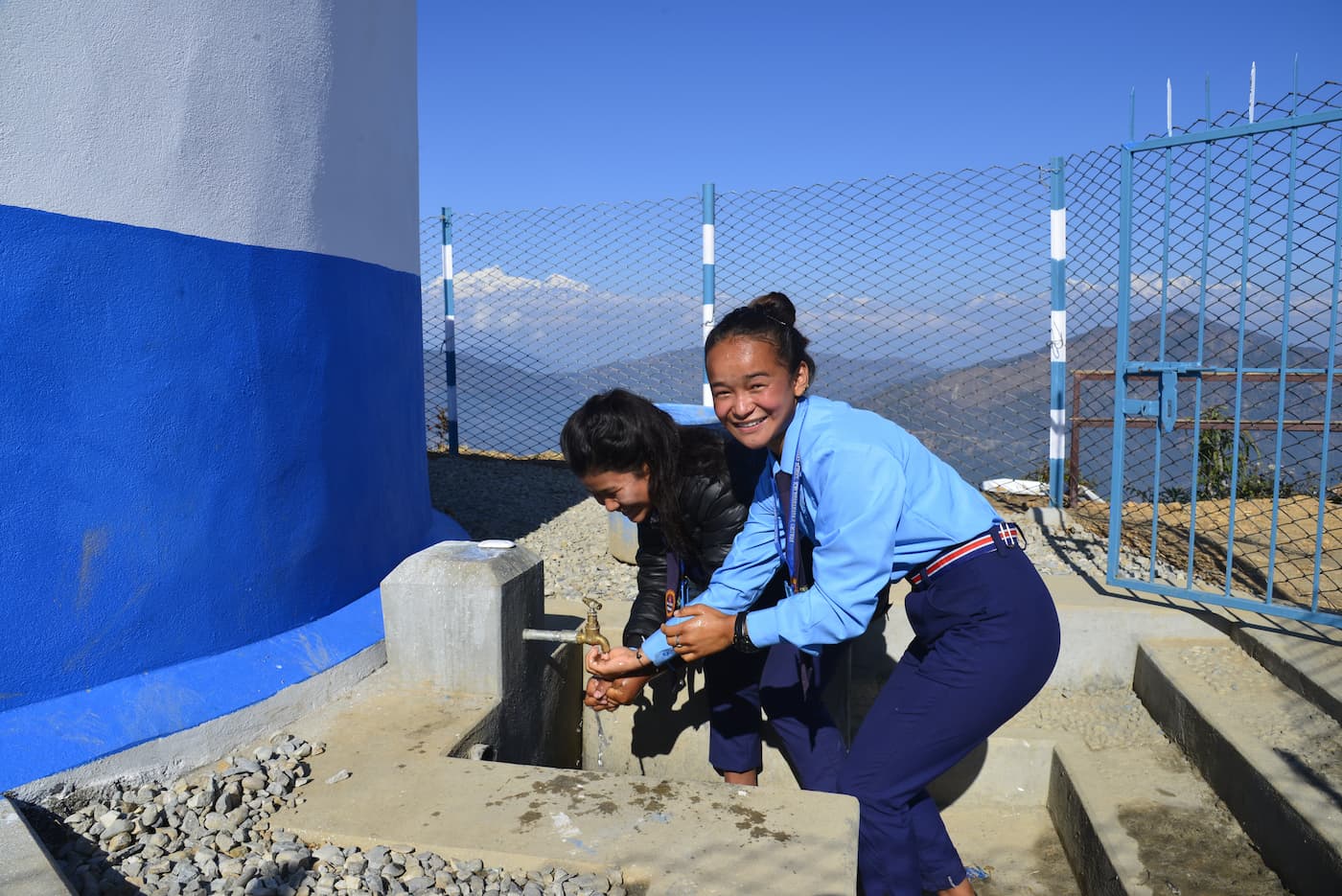
  • Built 30 household rainwater harvesting tanks and improved two springs.
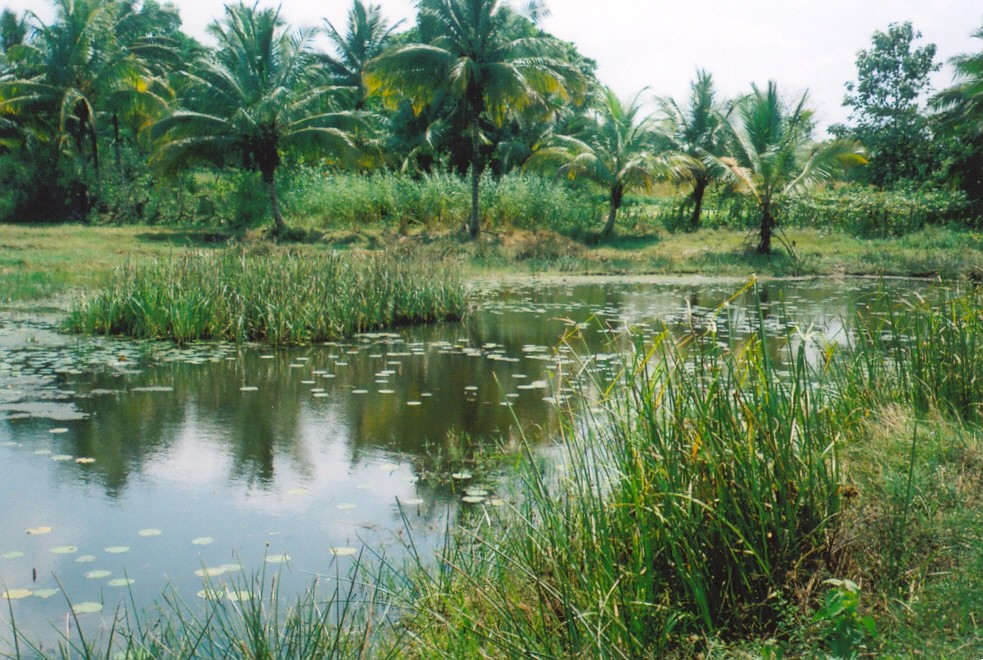
  • Restored pokharis (traditional ponds) so that rainwater can soak into the ground. Researchers from the Water Harvesting Lab helped to identify the best sites.
  • Set up three nurseries and planted trees on erosion-prone slopes with FECOFUN, choosing species that also give fruit, fodder and medicine.
  • Supported 20 families to set up agroecological production, with compost and polyhouses (simple greenhouses).

Results

  • 60 households in four rain communities benefited directly, and 4,624 to verify: households or people indirectly.
  • A Water Use Master Plan was developed for the watershed.
  • 30 rainwater tanks of 6 m³ now store water close to homes.
  • Two improved springs and restored pokharis help to recharge groundwater.
  • The work continues in Rain Communities Nepal – Phase 2 (2023–2026), which extends the approach to Kaski and Chitwan districts.

“Our Integrated Water Resource Management project will help to restore existing water resources.”

Gajendra Singh Pun, Team Leader, Kanchan Nepal (interview on the IRHA blog, 27 February 2020)

On the Ground

Swipe or use the arrows, and click on a photo to enlarge it.

Rain Community in Nepal · © Kanchan Nepal
Farmers in Nepal preparing land before access to rainwater harvesting · © Kanchan Nepal
Farmers in Nepal harvesting crops supported by rainwater harvesting systems · © Kanchan Nepal
Restored traditional pond (pokhari) with stone steps, Thuli Pokhari, Nepal · © Kanchan Nepal
Water buffaloes cooling off in a restored pond (pokhari), Nepal · © Kanchan Nepal
Drone view of a remote hamlet in the Himalayas with rainwater harvesting systems · © Kanchan Nepal
Planting a tree during a community reforestation day, Nepal · © Kanchan Nepal

Partners and Funders

  • Implementing partner: Kanchan Nepal (Pokhara)
  • Collaboration: FECOFUN (Federation of Community Forestry Users Nepal); Water Harvesting Lab, University of Florence
  • Funders: Republic and Canton of Geneva · Fonds 1% pour le développement · Municipality of Puplinge

Every Drop Restores

This project is completed. Discover what we are doing now, and help us take it further.