Our Projects · Rain-fed Agriculture & Food Sovereignty

Women of the Land

Femmes de Terre

Women's market-gardening groups restored land, planted trees and harvested rainwater to grow more food and income.

CompletedRain-fed Agriculture & Food Sovereignty2021–2024
© IRHA
WhereSenegal, Fatick and Kaolack regions (ten villages, including plots around Keur Maba)
When2021–2024
WithAPAF Senegal and local women's groups
Rainfall≈ 686 mm a year in Senegalnational average, World Bank; local figure to add

Results

  • 8women's groups supported
  • about40women per group, each group working a one-hectare plot
  • about2,800beneficiaries

The Challenge

Rural women in Senegal produce, process and sell most of the food eaten in their households. Their contribution to food security reaches up to 80%. Yet they have less access than men to land and finance. In a country where 76% of the poorest people live in rural areas, giving women better access to land, water and skills is a strong lever for food sovereignty.
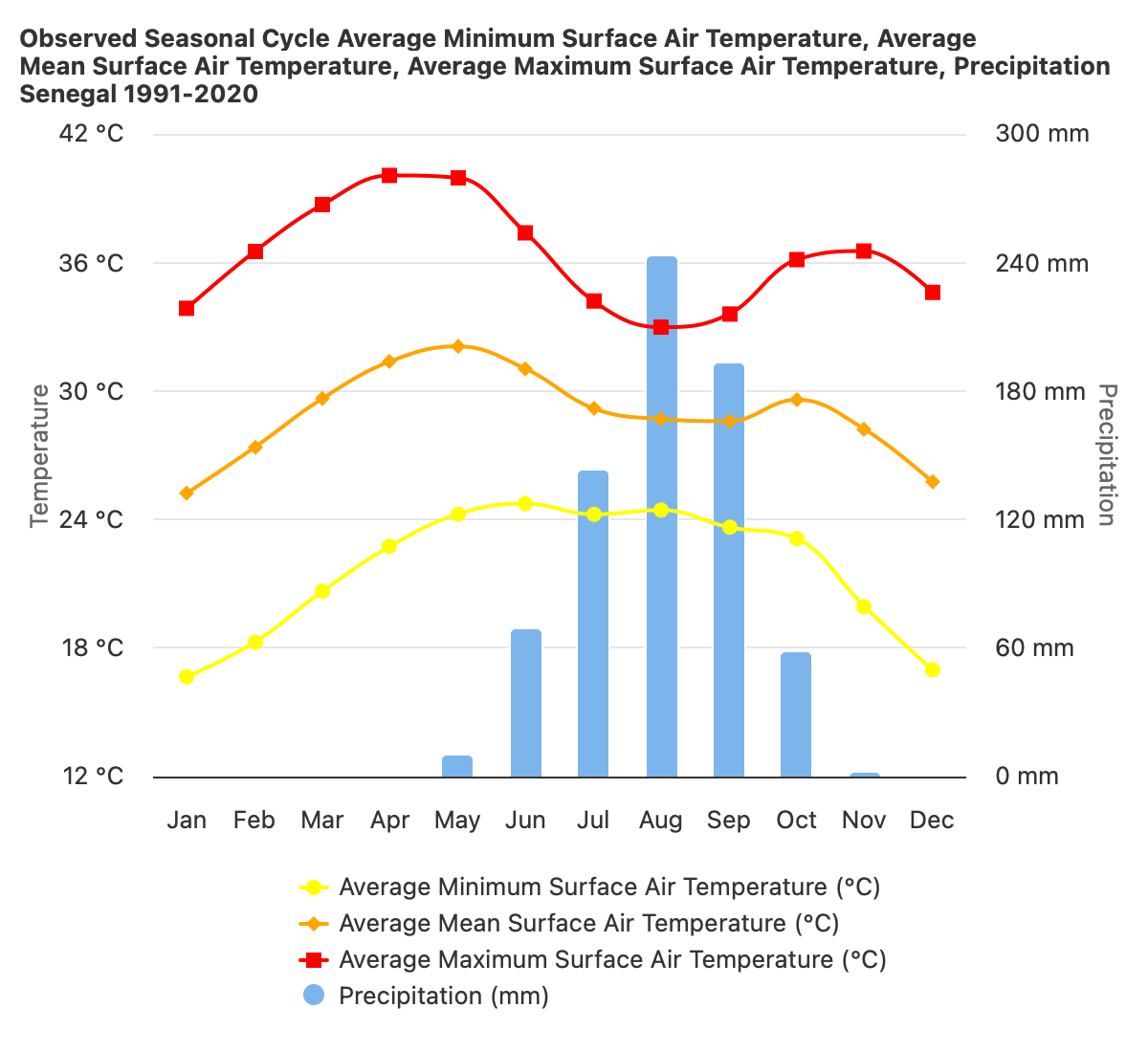
Average monthly rainfall and temperature in Senegal, 1991–2020
Rain in Senegal: about 686 mm a year, mostly June to October. Source: World Bank Climate Change Knowledge Portal (observed 1991–2020) and World Bank average precipitation.

What We Did

  • Trained women's groups in agroforestry, rainwater management and an agroecological approach from production to sale.
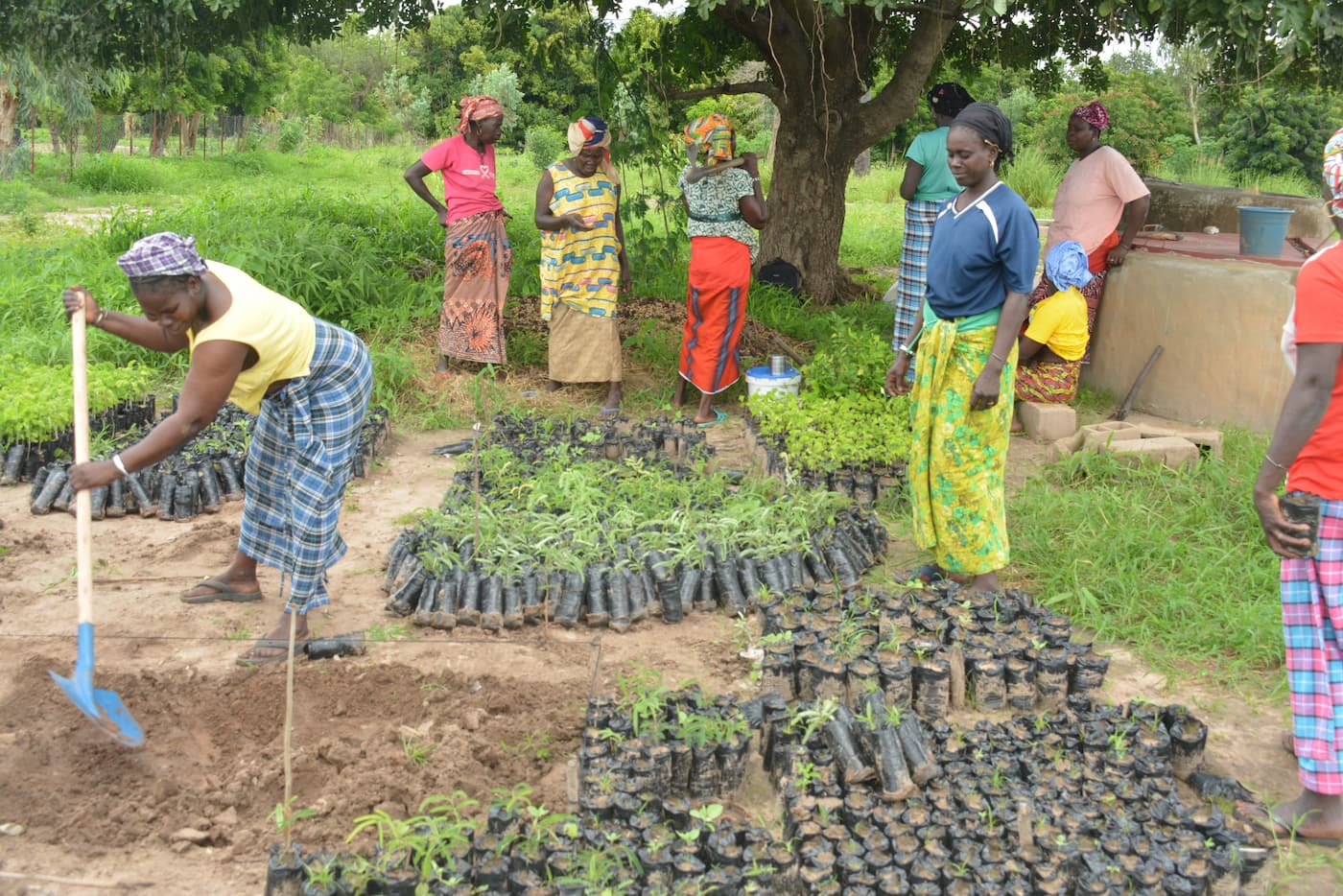
  • Added a tree layer to one-hectare market gardens: nitrogen-fixing honey locusts and acacias, plus mango, lemon, jujube and papaya trees.
  • Installed 10 m³ rainwater harvesting systems and vegetated anti-erosion strips.
  • Supported groups to organise their plots, sales and a shared fund for wells, tanks, fencing and seeds.
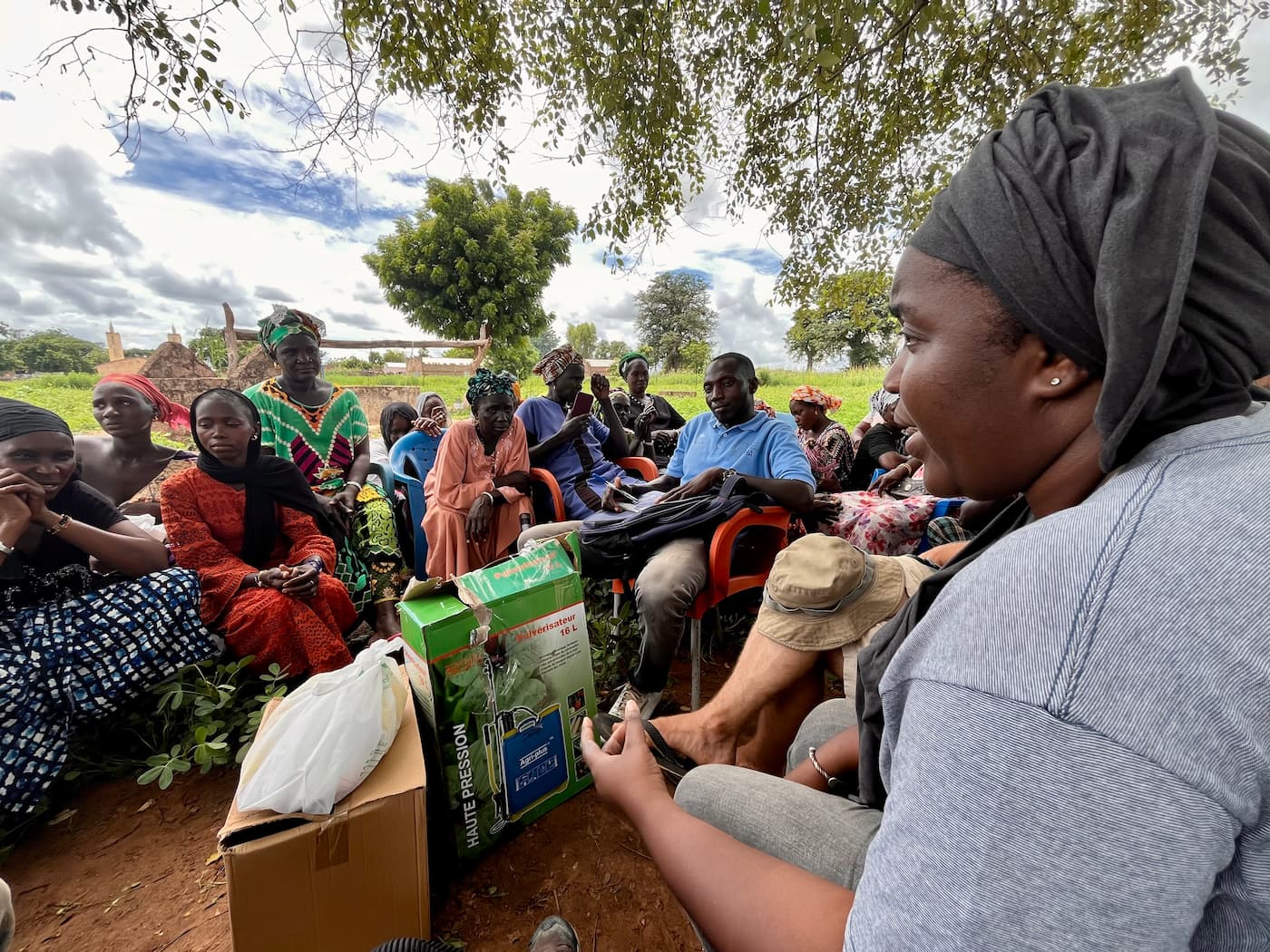
  • In December 2023, ran a two-day farmer-to-farmer training near Keur Maba on nurseries, planting, natural plant protection and potting soil.

Results

  • 8 women's groups strengthened in managing water, trees and soil.
  • More than 40 women from 5 groups trained in December 2023; they then decided to form a regional network to share seeds, seedlings and costs.
  • Plots grow a variety of crops – lettuce, hibiscus, chilli, aubergine and okra – which spreads risk and income.
  • 8 rainwater systems of 10 m³ installed, 6.83 hectares restored and 900 metres of anti-erosion barriers built.

Suññ diine guyy ñaare.

“The field that drinks rain will give again.”

Wolof sayingproverb: wording and translation to check with our local partner

On the Ground

Swipe or use the arrows, and click on a photo to enlarge it.

Women farmers planting crops in a field in Senegal supported by rainwater harvesting practices · © IRHA
Women farmers in Senegal sorting harvested crops as part of local agro ecoloy practices · © IRHA
Women attending a water management training in Senegal · © IRHA
Woman farmer in Senegal holding her young child and smiling in her field · © IRHA
IRHA team member meeting community in Senegal · © IRHA

Partners and Funders

Implemented with APAF Senegal (Association pour la promotion des arbres fertilitaires). Funded by Stiftung Drittes Millennium, the Temperatio Foundation, the Cantons of Basel and Aargau and the City of Plan-les-Ouates.

Resources

Project factsheet to upload (see notes in the page file)

From Our Blog Archive

archived posts: to re-publish on the new site, then update these links

Every Drop Restores

This project is completed. Discover what we are doing now, and help us take it further.