
By Florian Bielser
In Senegal, and more widely across the Sahel, water problems are increasingly worrying for people and ecosystems. The region has a rainy season of only three to four months, followed by a completely dry period of eight to nine months.
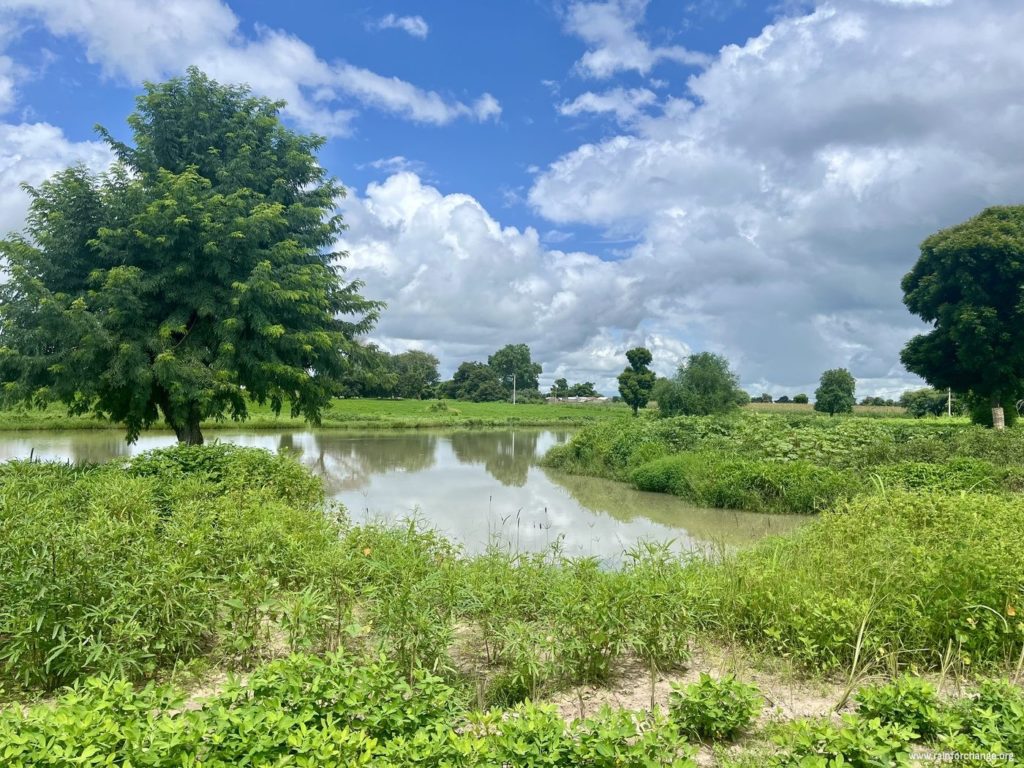
As part of its territorial diagnosis, IRHA located existing water points in the Sine Saloum region of Senegal. These water points, known locally as marigots, are essential for watering livestock and for all wild biodiversity.
Unfortunately, because of extreme heat, hot winds and intense sunlight, these marigots often dry up four to five months after the end of the rainy season, forcing animals and herders to migrate in search of water.
As part of the project “A Kop Ale no Maag Olè” (the Forest of the Sea), funded by the Audemars Piguet Foundation, IRHA, with Océanium Dakar and APAF Senegal, has reinforced these water points using the bouli concept. The idea comes from observing nature: vegetation along the edge of a pond limits evaporation and so makes the water point last longer.
A bouli creates permanent vegetation around the water point. This limits evaporation caused by hot wind blowing over the water surface, creates a microclimate that keeps the air more humid thanks to the plants’ evapotranspiration, and lets people produce essential fodder for their livestock.
The action led by IRHA and its partners is therefore essential to stabilise water points and protect both biodiversity and local people.
Read more on the project page: The Forest of the Sea.
First published on the former IRHA website on 15 September 2022.