
By Han Heijnen
Han Heijnen visited Nepal in March 2024 to take part in the Regional Conference on Rainwater Harvesting and Management in Kathmandu and to visit field programmes of IRHA’s partners. On his return to Kathmandu, he was invited by HECAF360 to give a webinar on rainwater harvesting in hospitals. HECAF360 is a Nepali NGO that has worked since 2006 on building capacity for hospital waste management, from the clinical ward upwards. Today it also advises on broader sustainable management, following the Global Green and Healthy Hospitals initiative.
In most least developed countries (LDCs), rural health centres have only spread in the last few decades. Rural hospitals, often first set up with NGO support, served large areas. They tended to be built on the edge of a town or village and are only now being gradually absorbed by the city. Water came from a borehole or an extension of the community supply. Newer health facilities are better equipped, but serious gaps remain in the operation of water, sanitation and hygiene (WASH) services.
The global report of the WHO/UNICEF Joint Monitoring Programme on WASH in health care facilities paints a distressing picture. One in five health care facilities does not have a basic water service, and in rural areas 11% have no water service at all. In the least developed countries, only 53% have a protected water source on the premises (WHO, 2022; washinhcf.org).
It does not have to be that way. Tansen Mission Hospital in western Nepal is a case in point. The hospital has some 170 beds and serves 12,470 inpatients and more than 100,000 outpatients a year. As the town’s water supply was limited, the hospital has always tried to manage its own water. For 40 years it has collected and stored rainwater for the hospital and staff quarters. Until 2016, storage had a total capacity of 1,188 m³. As Tansen grew and its municipal supply became scarcer, the city water available to the hospital fell, making the dry season increasingly difficult. An additional 1,500 m³ tank was completed in 2016. Tansen gets enough rain to fill it: collecting and using rainwater during the monsoon has made all the difference.
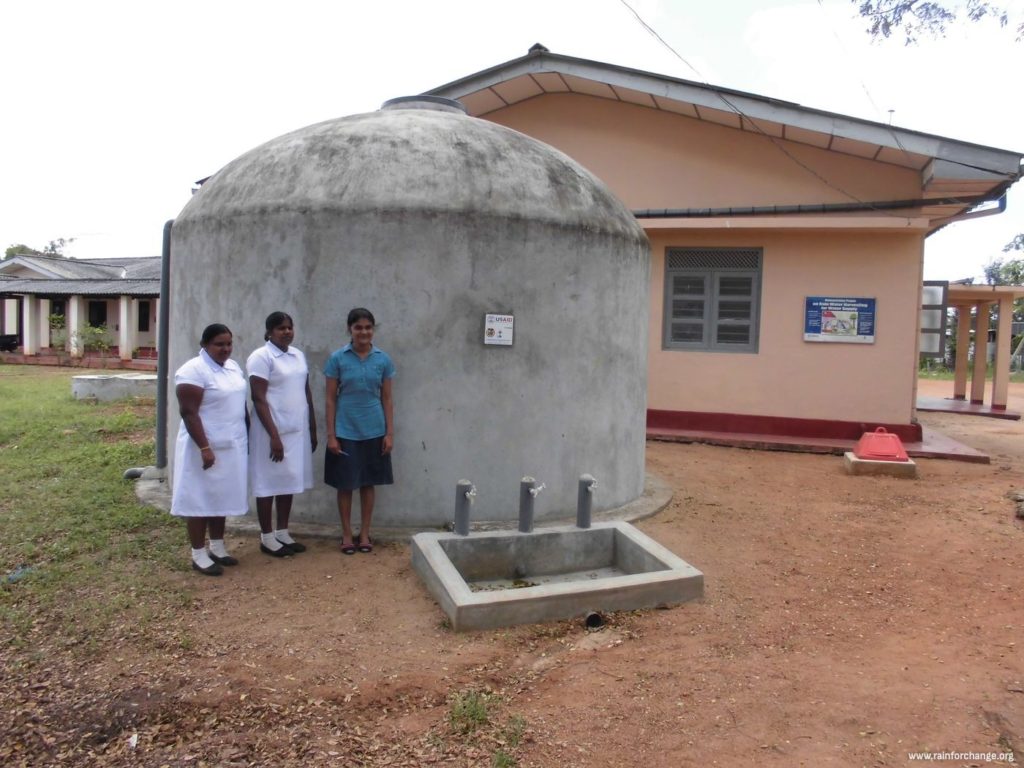
Health care facilities need water for drinking and handwashing, for various medical procedures, for cleaning during deliveries, for personal hygiene and showers, for mopping floors, flushing toilets and watering the garden. Without water, the risk of hospital-acquired infections rises sharply, as personal hygiene and general cleaning become impossible (WaterAid). As hospitals, and to a lesser degree rural health centres, usually have large roofs, collecting rain during storms and the monsoon can provide a lot of clean water.
Depending on its use – drinking or medical practice – the water will need treatment to meet national standards, or better. But most water simply needs to be clean. Rainwater usually meets that requirement, so it can be used for bathing, flushing toilets or cleaning floors without treatment, all the more as the microbial quality of rainwater improves quickly during storage.
The HECAF360 webinar was an opportunity to share the methods and benefits of rainwater harvesting with representatives of 12 hospitals from Kathmandu and other parts of Nepal. Smart Paani, a consulting firm that has built several institutional rainwater systems, also attended to answer practical questions. The presentation included an urban perspective from AMSCALL, regulatory aspects from a training programme prepared by ARCSA, and a practical example from Ly Nhan hospital in Viet Nam, implemented by Rain for All from Korea. All three are members of the IRHA Alliance. HECAF360 will follow up with the hospitals and encourage them to start collecting and storing rainwater.
First published on the former IRHA website on 29 May 2024.