
On 17 June 2026, the World Health Organization (WHO) published an updated version of its Guidelines for Drinking-water Quality: the fourth edition incorporating the first, second and third addenda. The update was presented at Singapore International Water Week on 18 June.
A global reference
The guidelines are a global reference for anyone who plans, regulates or runs drinking-water supplies. They cover how to manage drinking-water risks from catchment to consumer. Rainwater harvesting has its own place in them: it is one of the topics of the chapter on applying the guidelines in specific circumstances, alongside subjects such as climate change, emergencies and desalination.
The need is real: according to the WHO/UNICEF Joint Monitoring Programme, 2.1 billion people still lacked safely managed drinking water in 2024 (WHO, 2025).
Why it matters to us
When the news was shared at IRHA’s General Assembly on 18 June 2026, our President, Han Heijnen, explained that the updated guidelines give more attention to rainwater harvesting and its use as a source of drinking water. The guidelines have long recognised that well-designed systems, with clean catchments, covered storage and treatment where needed, can provide drinking water with a low health risk. The Assembly called the update a major advocacy milestone for IRHA and for the global rainwater harvesting movement.
What “well-designed” means in practice
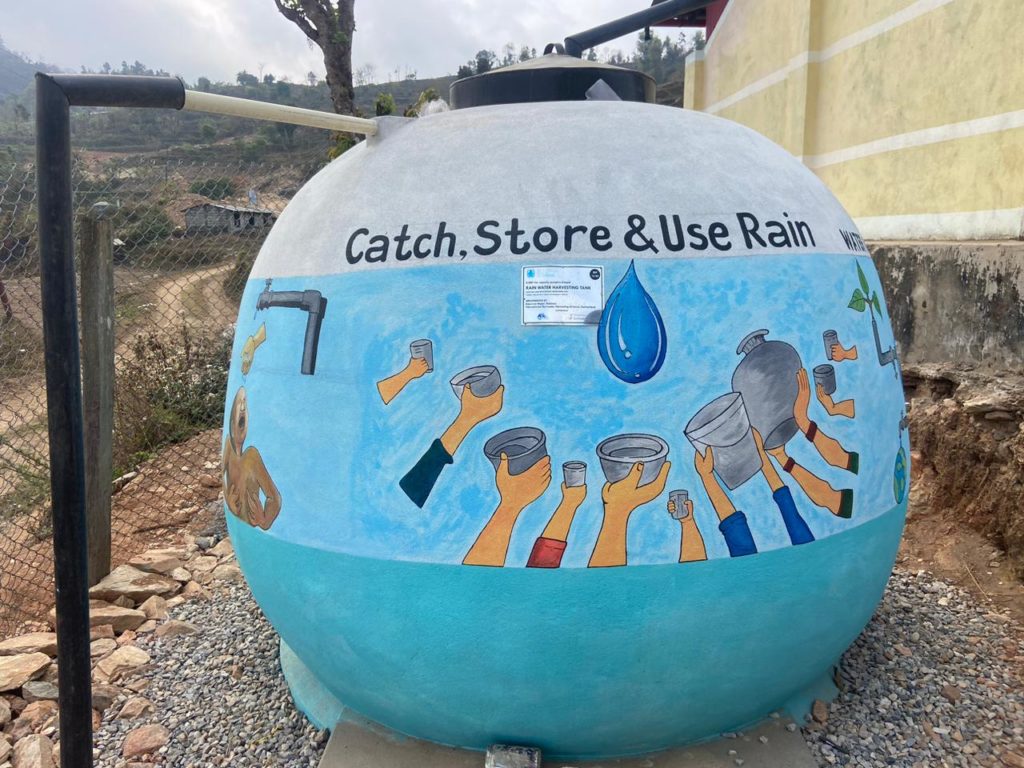
Safe rainwater depends on good design and good care. In our projects, the core methods are clean roof catchments, first-flush filters that divert the dirtiest first water, covered ferrocement cisterns and storage tanks, household water treatment where needed, and community training so that systems are maintained. In Sri Lanka, for example, local masons have been trained to build and rehabilitate school systems, a committee looks after them in each school, and water quality is monitored at 23 sources.
For millions of people who are unlikely to be connected to a piped water network in the near future, rainwater remains a reliable and essential source. Guidance that takes rainwater seriously gives governments and planners one more reason to count it as part of safe water supply.
Read the guidelines on the WHO website, and learn more about our Blue Schools.
Added to our news archive in November 2026.