
By Eleonora Forzini and Blandine Barthod
Storing monsoon water in the Nepalese hills is crucial to have enough water for the dry season, especially now that climate change is altering the intensity and pattern of rainfall.
As part of the Rain Communities project, a joint field mission took place in Nepal in October 2021 with team members of the Water Harvesting Lab (WHL) of the University of Florence and IRHA. The aim was to refine the choice of the best sites for water collection and infiltration in the project’s four Rain Communities in the Pokhara region: Thulakot, Begnas, Hansapur and Majhkot.
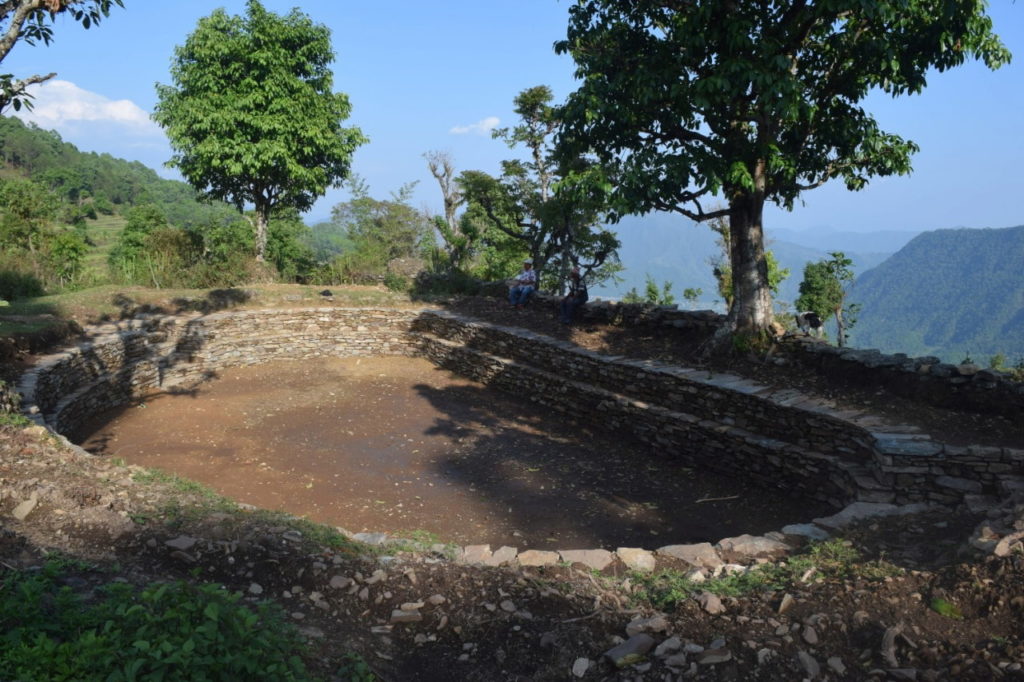
The mission focused in particular on identifying ancient pokharis in the project area, to plan their rehabilitation. Pokharis, traditional Nepali ponds used to store rainwater mainly for livestock and irrigation, are a good example of infrastructure that helps communities cope with water scarcity. Local people widely recognise the ecosystem services and water retention that pokharis provide, even though much of the traditional knowledge about them has been lost among the younger generation.
Read more on the project page: Rain Communities Nepal – Phase 1.
First published on the former IRHA website on 30 October 2021.