Our Projects · Rainwater for WASH

Blue SchoolsSri Lanka

Écoles bleues – Sri Lanka

With the Lanka Rain Water Harvesting Forum, four schools in Kurunegala District use rainwater for safe water, hygiene and learning.

OngoingRainwater for WASHsince 2025
© LRWHF
WhereKurunegala District, Sri Lanka
Whensince 2025
WithLanka Rain Water Harvesting Forum (LRWHF), school staff and pupils
Rainfall≈ 1,712 mm a year in Sri Lankanational average, World Bank; local figure to add

Key Figures

  • 4schools
  • 732pupils and teachers reached

The Challenge

In Sri Lanka, recurring droughts and floods weaken communities' ability to manage water. Droughts reduce supply and increase pollution, while floods contaminate drinking water sources. Schools need reliable water for drinking, handwashing and clean toilets. Reliable water also supports menstrual health, which helps girls in particular to learn in safe and dignified conditions.
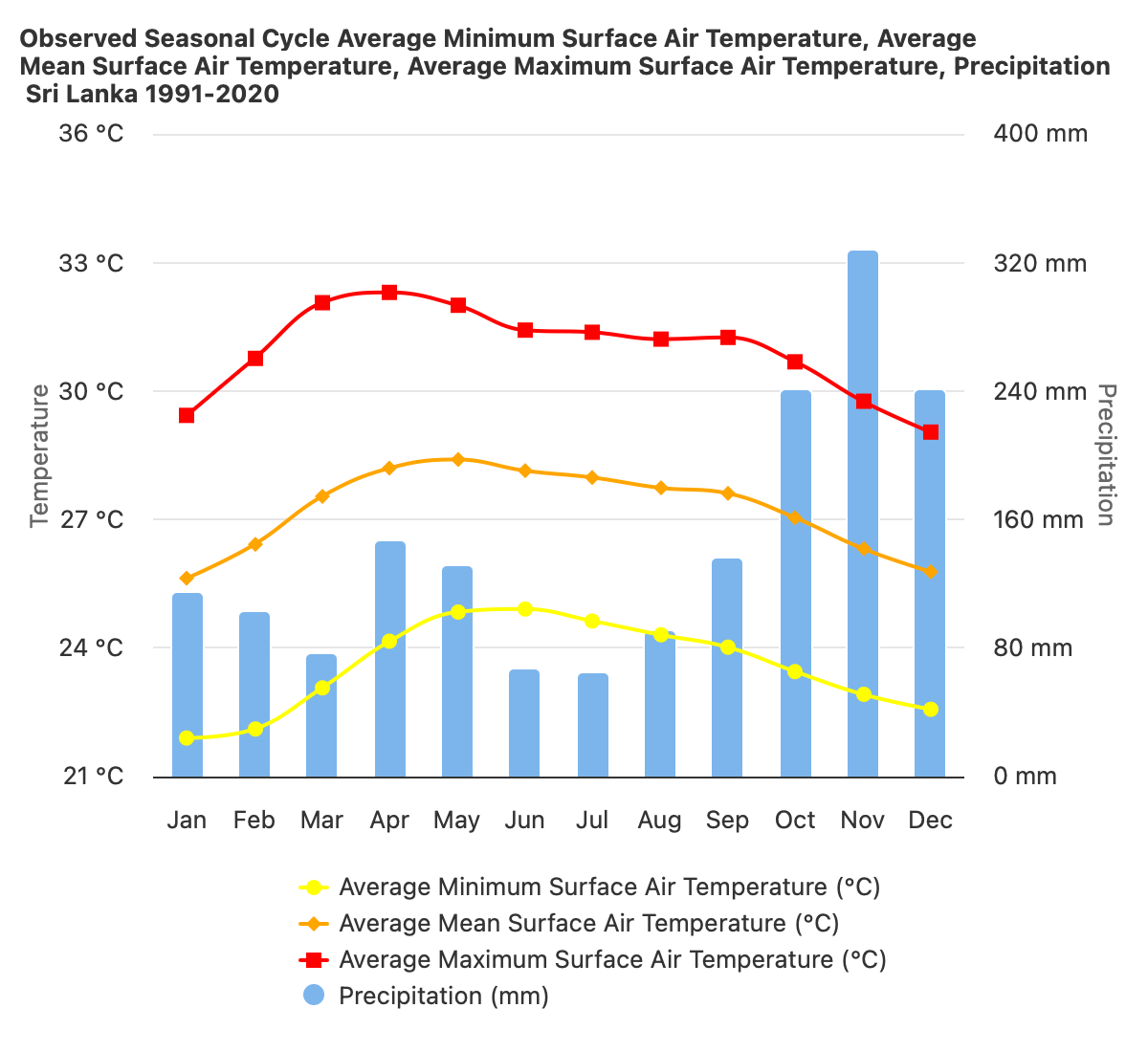
Average monthly rainfall and temperature in Sri Lanka, 1991–2020
Rain in Sri Lanka: about 1,712 mm a year, mostly two monsoons: May to September and October to January. Source: World Bank Climate Change Knowledge Portal (observed 1991–2020) and World Bank average precipitation.

What We Do

A Blue School is more than a school with water. It is a place where rainwater becomes a catalyst for sustainable change. In Sri Lanka, with LRWHF, we: – install rooftop rainwater harvesting systems in four schools; – run community awareness programmes – 23 so far; – monitor water quality at 23 water sources, so that the water stays safe; – apply the wider Blue School approach, which links water with sanitation, hygiene, school gardens and environmental education to verify: which components are included in Sri Lanka.

  • install rooftop rainwater harvesting systems in four schools;
  • run community awareness programmes – 23 so far;
  • monitor water quality at 23 water sources, so that the water stays safe;
  • apply the wider Blue School approach, which links water with sanitation, hygiene, school gardens and environmental education to verify: which components are included in Sri Lanka.

Results

  • 4 schools equipped with rainwater systems.
  • 732 pupils and teachers reached.
  • 23 community awareness programmes carried out.
  • Water quality monitored at 23 sources in 18 areas.
  • A management committee set up in each school; 2 community organisations established and active.
  • 5 local masons trained in building and rehabilitating the systems.

About Blue Schools

IRHA created the Blue School concept in 2007. Since then, IRHA has supported 72 Blue Schools directly. The Swiss Agency for Development and Cooperation and its partners later took up the approach and applied it in many more schools.

බිඳෙන් බිඳ කළේ පිරේ.

“Drop by drop, the pot fills.”

Sinhala proverbproverb: wording and translation to check with our local partner

On the Ground

Swipe or use the arrows, and click on a photo to enlarge it.

Blue school staff and children standing together in front of a rainwater harvesting tank in Sri Lanka · © LRWHF
School girls in Sri Lanka standing near a rainwater harvesting tank at their blue school · © LRWHF
Inauguration of a rainwater harvesting system at a Blue School in Sri Lanka · © LRWHF
Schoolgirls standing near and protecting a rainwater harvesting tank at their blue school in Sri Lanka · © LRWHF
Children holding a bottle and bowl in front of a rainwater tank in Sri Lanka · © LRWHF

Partners and Funders

  • Implementing partner: Lanka Rain Water Harvesting Forum (LRWHF), a member of the IRHA Alliance. LRWHF also hosts SARNET, the South Asia Rainwater Network, and brings long experience of rainwater harvesting in Sri Lanka.
  • Funder: Fédération genevoise de coopération (FGC)

Resources

Project factsheet to upload (see notes in the page file)

Every Drop Restores

Help communities catch, store and use the rain.