
By Florian Bielser
During the last two weeks of May, I went on a short mission to Senegal. I visited works carried out at the start of the year, met long-standing and new partners, ran awareness-raising and training sessions and supervised the start of erosion-control activities.
In this post, I would like to share what I observed when I met three women’s groups of the Women of the Land project (Femmes de Terre). Run with APAF Senegal, the project strengthens the capacity of eight women’s groups to maintain, restore and manage natural resources. A second post will soon describe the anti-erosion work, including gabions, vegetated stone lines and strong community involvement.
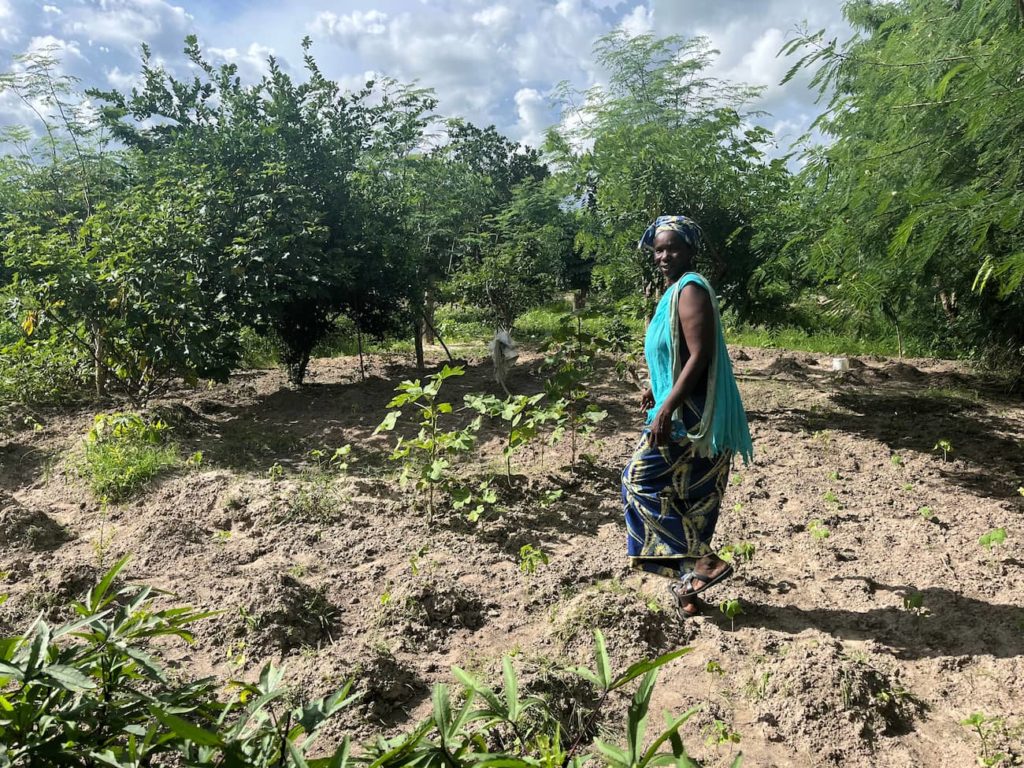
I had the pleasure of meeting women who, despite difficult conditions, achieve great results in their market gardens and always keep a positive energy – Senegal oblige!
In Women of the Land, one-hectare plots are tended and managed by groups of around forty women. Several internal management models allow the women to organise their fields: choice of varieties, upkeep and sale of the harvest. Depending on what the women agree, a field may be managed as a single unit or divided into sub-plots, usually of eight to ten growers. Tasks are shared out: for example, only a few women sell the whole group’s produce, leaving the others free to concentrate on gardening. A percentage of the sales income goes into a common fund to maintain shared infrastructure (wells, tanks, fencing, seeds), and the rest is divided equally among the members.
Unlike most fields in Senegal, these plots grow a variety of vegetables – lettuce, hibiscus, chilli, aubergine and okra – to diversify income and avoid the disastrous effects that a disease or pest can have on a single crop.
The project has also added a layer of trees to these market gardens. The trees provide shade and shelter from the wind, which reduces evaporation and makes watering more efficient. Nitrogen-fixing species such as honey locusts and acacias fertilise the soil, while their falling leaves add organic matter and cover the ground. Trees also help rainwater soak into the soil and, in times of drought, draw groundwater up towards the surface.
Finally, at the initiative of the field workers, fruit trees – mango, lemon, jujube and papaya – have been planted within the plots to diversify income.
The density and diversity of the plantings increase biodiversity, create a beneficial microclimate and make the environment and the people more resilient to climatic hazards (floods, droughts, storms), biological hazards (diseases, fungi, pests) and economic ones (market crises, globalisation, changes in agricultural policy).
Read more on the project page: Women of the Land.
First published on the former IRHA website on 31 May 2023.