
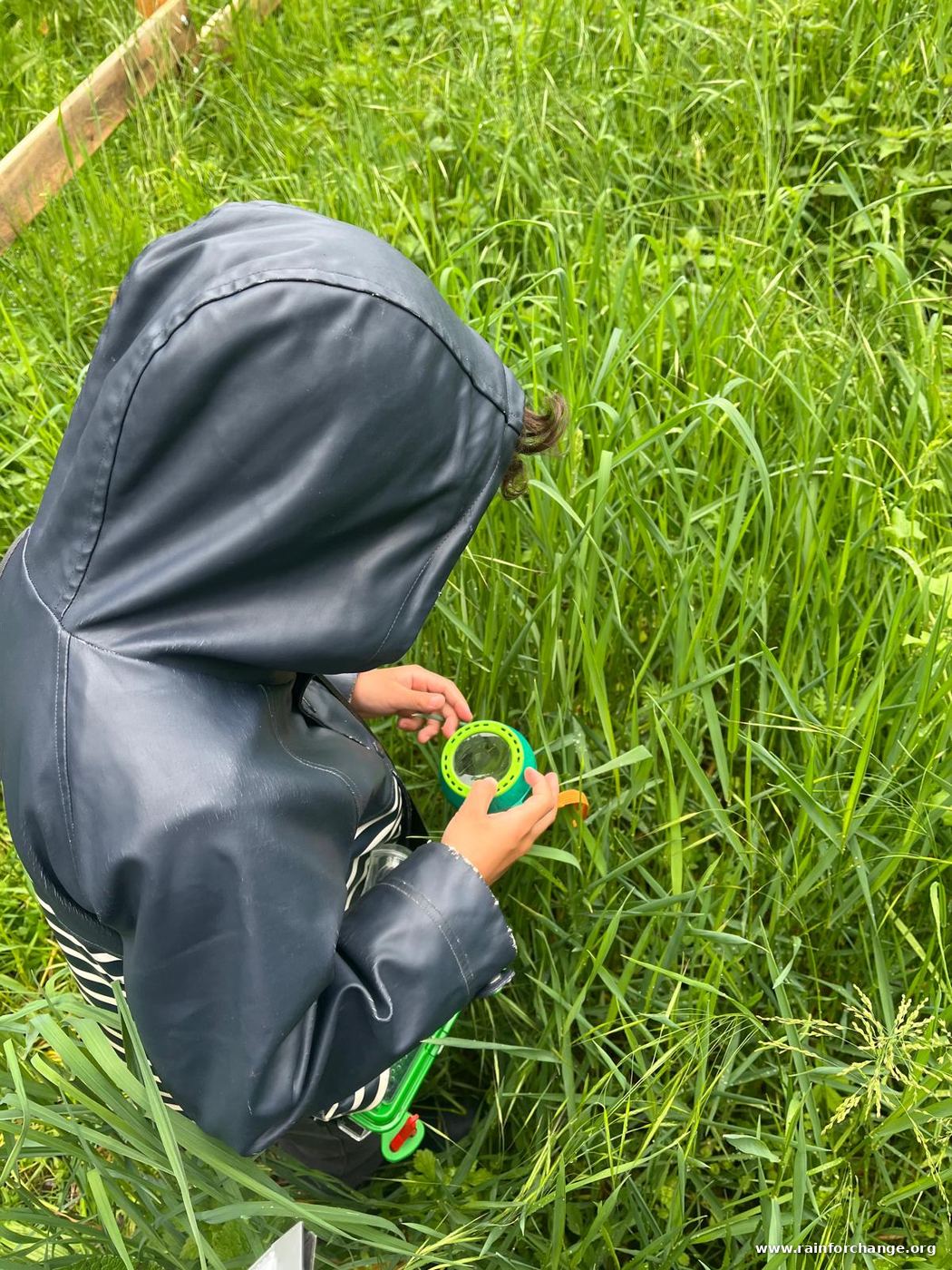
The sky over Geneva stayed grey all day on Saturday 17 October. It did not keep people away. Close to a hundred visitors, according to the organisers, came to the Ferme de Budé, an urban farm in the Petit-Saconnex district of Geneva, Switzerland, for « L’Afrique au cœur de l’assiette » (Africa at the heart of the plate), a family day held for World Food Day.
The day was organised by the Plateforme Souveraineté Alimentaire (PSA, Food Sovereignty Platform) and the Swiss NGO FH Suisse, with the Ferme de Budé and Ma Terre, and it was part of the 60th anniversary of the Fédération genevoise de coopération (FGC). The PSA is the working group of Geneva NGOs within the FGC that brings members like IRHA together around food sovereignty, a network we are proud to belong to. Ma Terre, the Maison de l’alimentation du territoire housed at the farm, works to bring Geneva’s producers and consumers closer together. World Food Day itself fell on 16 October, under the FAO theme “Innovate today. Nourish tomorrow.” (FAO). Our contribution was low-tech and hands-on: clay, a garden and the rain.
Source: FAO, World Food Day 2026 campaign.
The day at a glance
| Time | What IRHA offered |
|---|---|
| 10:00–15:30 | Clay workshop with ceramic artist Annabelle Voisin of Céramiques des Subsistances, our partner in clay: one collective irrigation jar, built coil by coil by many hands |
| 14:30 | Rain walk through the farm’s garden, following the path of rain and the water cycle |
| All day | IRHA stand and the “Vis ma pluie” exhibition |
One jar, many hands
Throughout the day, visitors took turns at the clay table to add coils to a single shared jar. It now stays with the Ferme de Budé for its garden, where it will water plants slowly from below once it is buried and filled. If you want to know how an oya works, our post on the oyas made at Genève Cultive’s garden party explains it step by step; Genève Cultive, the network of Geneva’s urban gardeners, planted those jars in May.
Following the rain
The walk is built on simple questions, with the farm all around us. Where does the rain land? Where does it soak in, and where does it run off? What do the vegetable beds do with it, and how does it return to the sky? On a grey day, the garden itself gave the answers.
Nearby, the “Vis ma pluie” panels told the same story from Senegal and Nepal. To see what our partners in Senegal do with the rain on their fields, read Back from Kaolack; for the fact sheets we produced with fellow PSA members, see PartageÖ 2024.
Further reading
- World Food Day 2026: the FAO campaign page.
- Water Harvesting Lab, University of Florence: a research group working on water harvesting for food security.
A warm thank you to the PSA and FH Suisse, to the Ferme de Budé and Ma Terre for welcoming us to the farm, to the City of Geneva for supporting the day, and to everyone who came despite the weather.
Support a project: in Senegal, our Women of the Land and Rain project helps women farmers keep the rain where their crops grow. Every drop counts, and so does every donation.
Follow our upcoming events on the IRHA events calendar, and our news on the News & Media page.