
By Florian Bielser
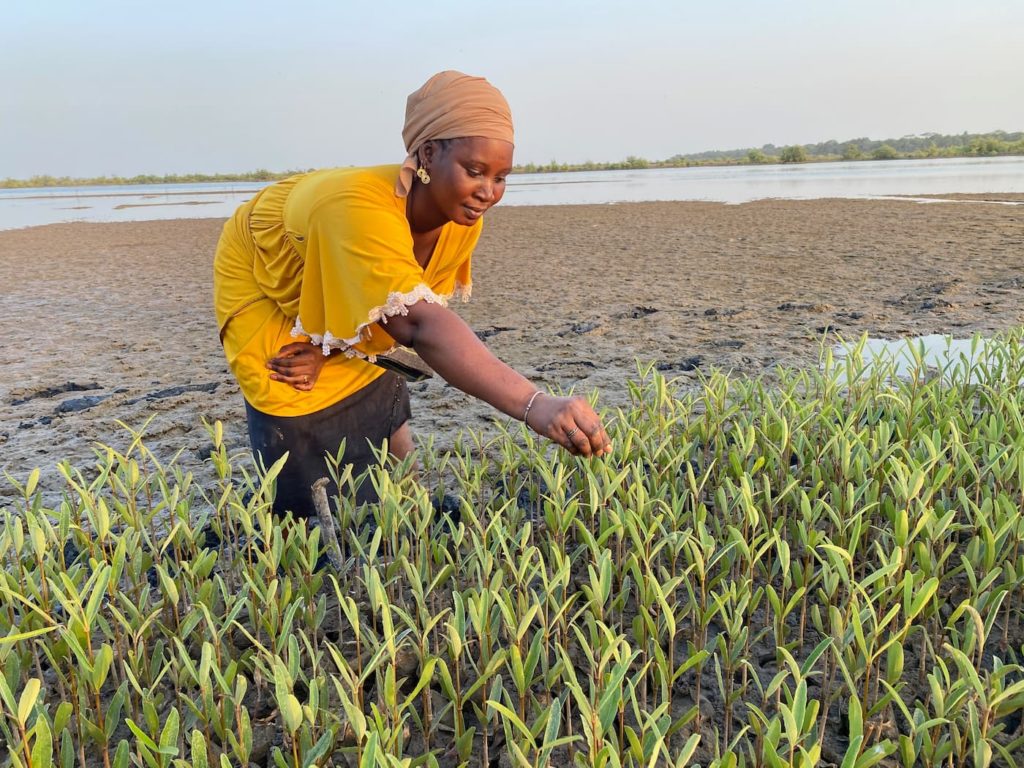
To mark the International Day for the Conservation of the Mangrove Ecosystem on 26 July, IRHA is pleased to present its latest project with Océanium Dakar, which will start at the end of 2021 in the Sine Saloum estuary in central Senegal: “A Kop Ale no Maag Olè” (the Forest of the Sea). For 24 months, it will support the communities of four estuarine villages in the commune of Djilasse (Fatick, Senegal).
This initiative, supported by the AP Foundation, aims to strengthen the resilience of the Sine Saloum’s estuarine ecosystems and communities in the face of growing climate risks, by building the technical and management capacities of local actors in ecosystem restoration.
In the Sine Saloum, the advance of salty bare land (tannes) is one of the main causes of the loss of vegetation cover, on land as well as in the estuary’s mangroves, of land degradation and of aquifer salinisation. Droughts at the end of the 1970s and in the 1980s, combined with population growth that increased human pressure on natural resources, especially mangroves, have caused land salinisation, which has accelerated dramatically since 2015.
Through a combined landscape approach – mangrove restoration, natural resource management (especially soil and rainwater) and the reintroduction of agroforestry patches – the “A Kop Ale no Maag Olè” project aims to break this vicious circle.
Mangroves are central to the ecological and socio-economic balance, both along the estuary and inland. As a biodiversity niche, a barrier against coastal erosion and against the salinisation of land and aquifers, and a real carbon sink, mangroves provide unique, internationally recognised ecosystem services. Restoring them rebuilds the estuary’s natural protective barrier and limits the salinisation of land further inland.
As well as restoring the mangrove, the project promotes better management of natural resources, particularly rainwater, to reduce run-off and the loss of arable soil while strengthening ecosystems and aquifers. Restoring freshwater levels underground will help lower salt levels and allow local producers to use their wells again to irrigate off-season crops such as vegetables and fruit trees.
Finally, agroforestry patches will give communities an important source of wood and fodder, easing pressure on the depleted forest cover while making soils fertile again, which improves farm productivity and food security.
Read more on the project page: The Forest of the Sea.
First published on the former IRHA website on 25 July 2021.